How to Buy Topaz Stones Like a Gemology Pro
What You Need to Know Before You Buy a Topaz Stone
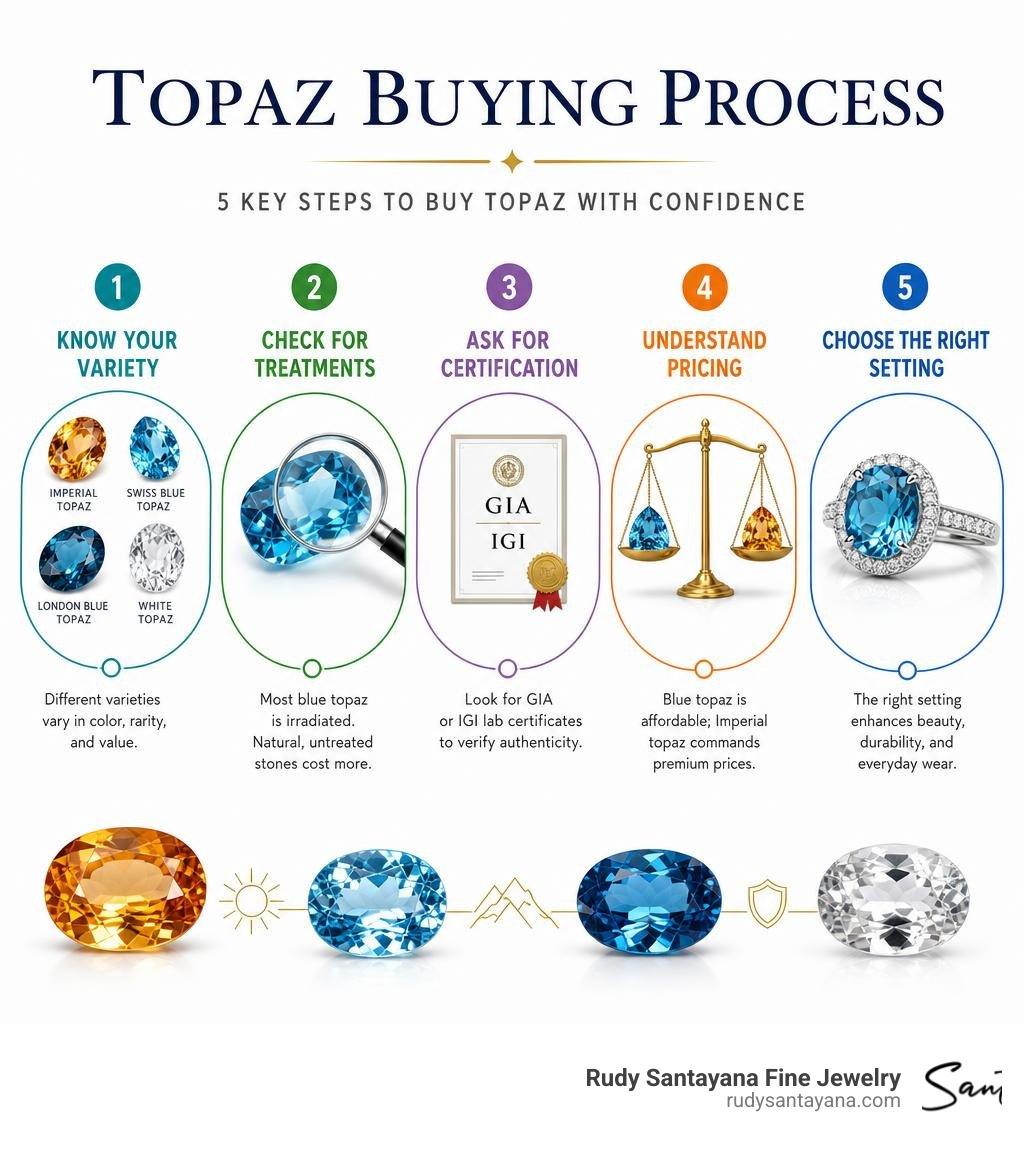
If you want to buy topaz stone with confidence, here is a quick guide to get you started:
- Know your variety — Imperial, Swiss Blue, London Blue, and White Topaz all differ in value and appearance.
- Check for treatments — Most blue topaz is irradiated. Natural, untreated stones cost more.
- Ask for certification — Look for GIA or IGI lab certificates to verify authenticity.
- Understand pricing — Blue topaz is affordable; Imperial topaz commands premium prices.
- Buy from reputable sellers — Fine jewelers and certified gemstone dealers offer the best assurance of quality.
Topaz has captivated people for thousands of years. The ancient Greeks called it Topazos — named after an island in the Red Sea — and believed it could grant strength to the wearer. Today, it remains one of the most beloved gemstones in fine jewelry, prized for its brilliant clarity, wide range of colors, and remarkable durability with a Mohs hardness of 8.
It is also the traditional November birthstone, making it a meaningful gift for loved ones born in that month — and a stunning choice for anyone who simply appreciates a gem that balances beauty with wearability.
But buying topaz is not as simple as picking the prettiest blue stone in a display case. Treatments, origin, certification, and quality factors all play a role in whether you are getting genuine value — or paying too much for something that does not deliver.
I'm Rudy Santayana, a fine jewelry designer based in Miami, Florida, with years of experience helping clients buy topaz stone pieces that are both breathtaking and genuinely worth their investment. At Rudy Santayana Fine Jewelry, I specialize in custom designs and can guide you through every step of selecting and setting the right topaz for your style and needs.
What is Topaz? Understanding the Varieties and Origins
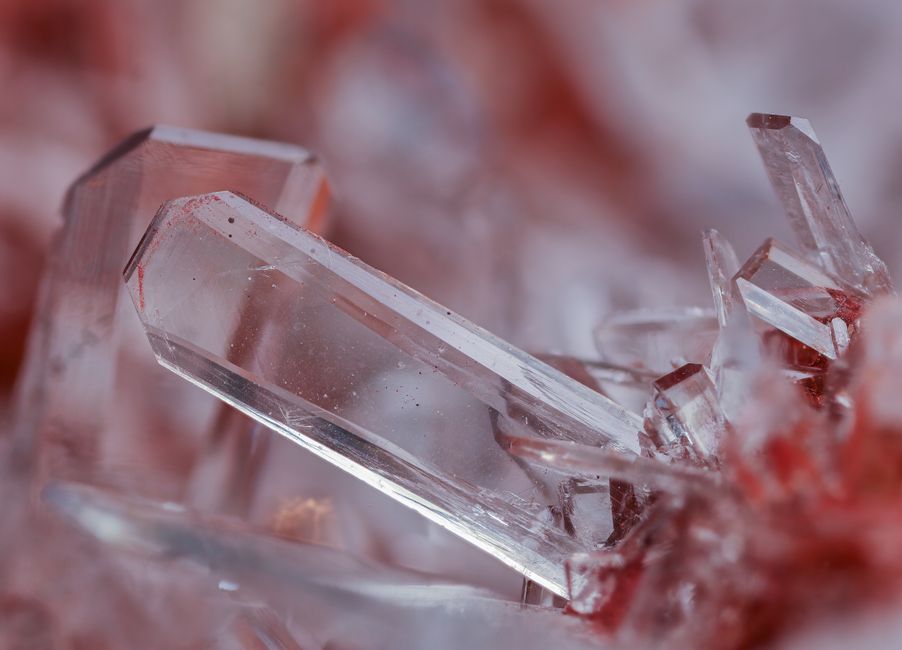
To make an informed purchase, we must first understand what topaz actually is from a scientific perspective. Topaz is a silicate mineral composed of aluminum and fluorine, represented by the chemical formula $\text{Al}_2\text{SiO}_4(\text{F},\text{OH})_2$.
In the gemological world, it belongs to the orthorhombic crystal system. It typically forms in high-temperature environments within igneous rocks like granite and rhyolite, as well as in pegmatite dikes and metamorphic zones. It often crystallizes into elegant, long prismatic crystals that are naturally "eye-clean," meaning they have very few visible internal flaws.
Topaz ranks at an impressive 8 on the Mohs scale of hardness, making it one of the hardest silicate minerals on Earth, surpassed only by chrysoberyl, corundum, and diamond. However, topaz also possesses perfect basal cleavage in one direction. This means that while it is highly resistant to scratching, a sharp, direct blow along its cleavage plane can cause the stone to split or chip.
Another fascinating optical property of topaz is its pleochroism. This means the gemstone can display different colors or shades when viewed from different angles, which skilled cutters exploit to maximize the depth of color in the finished piece.
Historically, topaz has been discovered in mind-boggling sizes. For instance, the famous Brazilian Princess blue topaz weighs an astonishing 21,327 carats, while the legendary American Golden Topaz tips the scales at a massive 22,892.5 carats. While you probably will not be wearing a twenty-thousand-carat rock on your finger, these legendary specimens demonstrate the incredible scale at which natural topaz can grow.
Imperial, Blue, and White Topaz Varieties
Topaz comes in a beautiful spectrum of colors, each with its own market value, rarity, and aesthetic appeal.
- Imperial Topaz: This is the undisputed king of the topaz family. Characterized by a rich, intense reddish-orange, peach, or golden-pink hue, true Imperial topaz is incredibly rare and highly coveted by collectors. Historically, it was reserved exclusively for the Russian royal family.
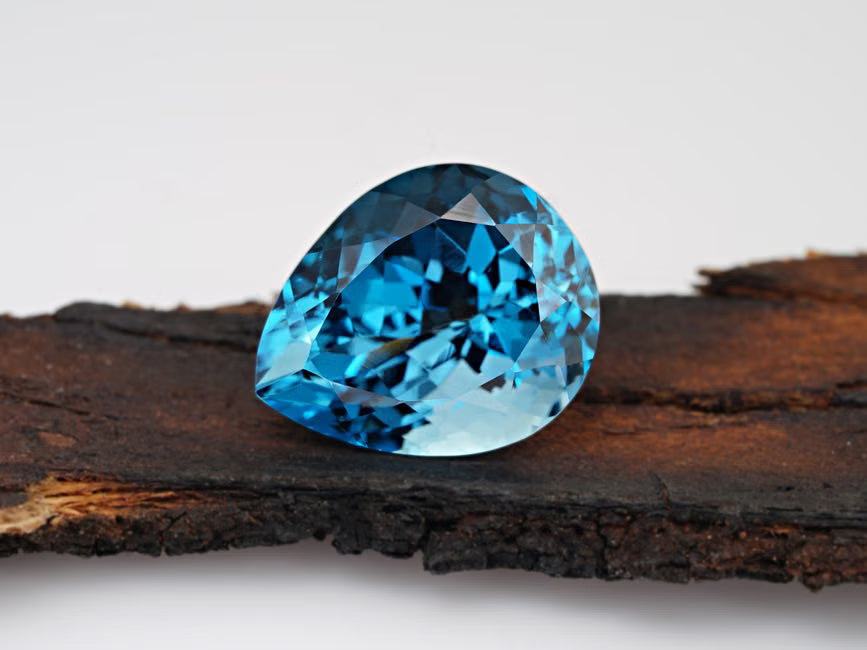
- Swiss Blue Topaz: This variety features a bright, electric, medium-blue color. It is highly saturated, vibrant, and reminiscent of a clear summer sky. It is one of the most popular choices for modern fashion jewelry.
- London Blue Topaz: Boasting a deep, smoky, grayish-blue hue, London Blue is the darkest and most sophisticated of the blue varieties. Its moody, oceanic tone makes it incredibly popular for statement rings and vintage-inspired designs.
- Sky Blue Topaz: This variety displays a soft, delicate, pastel-blue color similar to aquamarine. It offers an elegant, understated look at a very accessible price point.
- Natural White Topaz: Completely colorless and highly transparent, white topaz is increasingly used as a brilliant, durable, and affordable alternative to diamonds. If you are looking for a substantial, sparkling white gemstone, it can serve beautifully as the centerpiece for a custom setting.
Global Sourcing and Mining Origins
Topaz is mined all over the world, but certain geological regions are famous for producing the highest-quality specimens.
- Minas Gerais, Brazil: This region is the world's primary source of top-tier topaz, particularly the highly prized Imperial topaz. The Ouro Preto mines in Minas Gerais are legendary for producing stones with unparalleled color saturation.
- Gilgit Baltistan, Pakistan: Renowned for producing spectacular, high-clarity raw crystals and beautiful pink and golden varieties. Jewelers and collectors often seek out these remote mines to source exceptional raw material.
- Sri Lanka: Famous for its water-worn pebbles of colorless "giant" topaz, which are often heat-treated to create brilliant blues.
- Russia: The Ural Mountains have historically produced exquisite pink topaz varieties, though these are exceptionally rare on the modern market.
- Nigeria: A prominent producer of high-quality white and light-blue topaz that responds beautifully to enhancement processes.
Natural vs. Treated Topaz: What Buyers Must Know
When you set out to buy topaz stone jewelry, you must understand the difference between natural, untreated colors and enhanced stones.
In nature, truly blue topaz is incredibly rare and usually very pale. The vast majority of the blue topaz you see in jewelry stores today started its life as colorless white topaz. To achieve those striking Swiss Blue and London Blue shades, the colorless stones are subjected to an industry-accepted two-step process: irradiation (exposure to radiation) followed by heat treatment.
This treatment is permanent, stable, and does not fade over time. Because these enhancements closely mimic the natural radiation and heat processes that occur deep within the Earth over millions of years, they are virtually impossible to detect without advanced laboratory equipment.
Another popular treatment is the creation of Mystic Topaz. This is not a natural color variety. Instead, natural colorless topaz is given a microscopic, high-tech titanium coating on its pavilion (the underside of the stone) using a process called physical vapor deposition (PVD). This coating creates an iridescent, rainbow-like play of colors. Mystic topaz can be visually dramatic, but because the coating sits on the surface, it should be disclosed clearly by the seller and handled with extra care during setting and cleaning.
How to Detect Treated and Enhanced Stones
Because professional treatments are so sophisticated, you cannot rely on visual inspection alone to determine if a stone is natural or treated. Here is how we ensure authenticity:
- Lab Certification: Always request a certificate from a reputable, independent gemological laboratory such as the Gemological Institute of America (GIA) or the International Gemological Institute (IGI). These certificates will explicitly state whether the stone is natural, treated, or coated.
- Color Uniformity: Extremely vivid, uniform blue tones are a telltale sign of irradiation. Natural blue topaz is typically much lighter and may show slight color zoning when rotated.
- Refractive Index and Specific Gravity: Gemologists verify the physical properties of the stone (refractive index of 1.61-1.64 and specific gravity of 3.49-3.57) to ensure it is actual topaz and not a synthetic stimulant like cubic zirconia or blue glass.
Essential Factors to Consider Before You Buy Topaz Stone
To evaluate a topaz gemstone like a true gemology pro, you should apply the classic "Four Cs" of gemstone grading, adapted specifically for colored stones.
The Four Cs of Topaz Evaluation
- Color: For Imperial topaz, look for a vibrant reddish-orange with strong saturation. For blue topaz, decide whether you prefer the electric brightness of Swiss Blue or the deep, moody saturation of London Blue. Ensure the color is evenly distributed throughout the stone.
- Clarity: Topaz is generally a Type I gemstone, meaning it should be "eye-clean" (free of eye-visible inclusions). Avoid stones with cracks or inclusions close to the surface, as these can compromise the structural integrity of the gem.
- Cut: A well-cut topaz will exhibit brilliant sparkle and minimal "windowing" (areas where light leaks through the center of the stone, making it look dull or see-through). Because of its perfect cleavage, the cut must be executed with precision to ensure the stone can be safely set into jewelry.
- Carat Weight: Unlike rare gems like ruby or sapphire, where the price per carat skyrockets exponentially for larger stones, blue topaz remains relatively affordable even in larger carat weights. However, rare Imperial topaz prices do rise dramatically as the carat size increases.
| Value Factor | What to Look For | Impact on Price |
|---|---|---|
| Color | Intense reddish-orange (Imperial) or deeply saturated London Blue | High (Imperial commands premium prices; blue is highly accessible) |
| Clarity | Eye-clean, transparent, free of visible internal cracks | Medium (Inclusions lower the value and durability) |
| Cut | Precision facets, excellent light return, no windowing | Medium (A poor cut ruins the stone's natural brilliance) |
| Carat | Choose a size that balances your design with your budget | Low for Blue Topaz; High for Imperial Topaz |
Where to Buy Topaz Stone Online and In-Store
When shopping for topaz, choosing the right source is paramount. Whether you are comparing loose stones online or visiting a showroom in person, prioritize sellers who provide clear treatment disclosures, transparent pricing, detailed gemstone descriptions, and reasonable return policies.
For online purchases, review the stone's measurements, color description, treatment status, origin information when available, and any independent lab documentation. Be cautious with listings that use vague terms, heavily edited photos, or prices that seem dramatically below market value for the stated variety.
However, if you are located right here in Coral Gables, FL, or Miami, FL, nothing beats the experience of working with a local, high-end custom jeweler. Shopping in-person at Rudy Santayana Fine Jewelry allows you to examine the gemstone under professional lighting, view it through a jeweler's loupe, and collaborate directly with us to design a handcrafted setting that perfectly showcases the stone's unique brilliance.
How to Buy Topaz Stone for Astrological and Metaphysical Uses
In addition to its physical beauty, many buyers seek out topaz for its profound astrological and metaphysical associations.
In Vedic astrology, natural yellow or golden topaz is highly revered as a powerful substitute for Yellow Sapphire (Pukhraj). It is associated with the planet Jupiter (Guru), which represents wisdom, expansion, prosperity, and spiritual growth. Astrologers often recommend yellow topaz to individuals born under the zodiac signs of Sagittarius (Dhanu) and Pisces (Meena).
If you are buying topaz for astrological purposes, keep these guidelines in mind:
- Choose a natural, completely untreated stone.
- Ensure the gemstone is eye-clean and free of flaws.
- Set the stone in gold or silver so that it makes direct contact with your skin when worn.
Beyond astrology, artists and philosophers have long been fascinated by the metaphysical weight of stone. To appreciate how gemstones and geological elements influence contemporary art and human expression, look at works like Janine Antoni | Whispering Through a Stone - Luhring Augustine, which explore the deep, silent connection between humanity and natural minerals.
Topaz in Jewelry: Popular Cuts, Settings, and Care

Because of its superb clarity and hardness, topaz can be faceted into almost any shape imaginable. Some of the most popular cuts include:
- Trillion Cut: A triangular shape with curved sides that maximizes light return, giving the stone an incredibly modern, fiery sparkle.
- Emerald Cut: A step-cut style with long, rectangular facets that highlight the gemstone's pristine clarity and deep color saturation.
- Oval Shape: A classic, timeless cut that elongates the finger and offers exceptional brilliance.
When it comes to metal pairings, blue topaz looks stunning when set in cool metals like platinum or 14K/18K white gold. Imperial and yellow topaz, on the other hand, pair beautifully with the warm, rich tones of yellow gold or rose gold.
Choosing the Right Setting for Topaz Jewelry
Because topaz has perfect basal cleavage, choosing the right setting is crucial for protecting your gemstone from accidental damage.
- Prong Setting: Classic four- or six-prong settings allow maximum light to enter the stone, highlighting its brilliance. For trillion or pear cuts, we always recommend V-prongs to shield the vulnerable pointed corners of the gem.
- Bezel Setting: A bezel setting wraps a protective metal collar entirely around the girdle of the stone. This is the most secure setting option, making it ideal for active individuals who want to wear their topaz jewelry daily without worry.
- Custom Mountings: At Rudy Santayana Fine Jewelry, we design custom, handcrafted mountings tailored specifically to the unique dimensions and cleavage lines of your chosen topaz, ensuring both breathtaking beauty and lifelong durability.
How to Clean and Care for Your Topaz Stone
While topaz is tough, it still requires proper care to maintain its brilliant luster. Follow these simple steps to keep your jewelry looking brand new:
- Clean gently: Use warm, soapy water and a soft-bristled toothbrush to gently clean behind the stone where dirt and oils accumulate.
- Avoid ultrasonic and steam cleaners: The high-frequency vibrations of ultrasonic cleaners and the intense heat of steam cleaners can cause a topaz to fracture along its cleavage planes.
- Prevent thermal shock: Avoid exposing your topaz to sudden, extreme temperature changes (such as going from hot water to cold air), which can cause internal cracking.
- Store separately: Always store your topaz jewelry in a soft pouch or a fabric-lined jewelry box away from harder stones like diamonds or sapphires to prevent accidental scratching.
Frequently Asked Questions About Topaz
Is topaz suitable for daily wear in jewelry?
Yes, with a Mohs hardness of 8, topaz is highly durable and well-suited for daily wear in rings, pendants, and earrings. However, because of its perfect basal cleavage, you should avoid wearing topaz rings during heavy physical labor or high-impact activities to prevent the stone from chipping if it suffers a direct blow.
What is the difference between London Blue and Swiss Blue topaz?
The primary difference lies in their color saturation and depth. Swiss Blue topaz features a bright, electric, vivid medium-blue color that resembles a brilliant tropical sky. London Blue topaz is much darker, displaying a deep, sophisticated, smoky grayish-blue hue with subtle green undertones. Both varieties are created through professional irradiation and heat treatments, but London Blue requires longer exposure to achieve its deep saturation.
How much does a natural topaz stone cost per carat?
The price of topaz varies wildly based on color. Treated blue topaz (including Swiss and London Blue) is highly abundant and very affordable, typically ranging from $5 to $25 per carat depending on the cut and clarity. Natural, untreated white topaz is similarly accessible. In contrast, rare, natural Imperial topaz is highly valuable, with prices ranging from several hundred to several thousand dollars per carat for top-quality specimens.
Conclusion
Whether you are looking to buy topaz stone jewelry as a meaningful November birthstone gift, an astrological talisman, or simply a breathtaking addition to your personal collection, understanding the nuances of this remarkable gemstone ensures you will make a purchase you'll cherish forever.
At Rudy Santayana Fine Jewelry in Coral Gables, Florida, we are passionate about turning these incredible natural treasures into one-of-a-kind, handcrafted masterpieces. We pride ourselves on providing superior customer service and innovative, personalized designs that perfectly align with your style and vision.
If you are ready to create your own bespoke jewelry piece featuring a hand-selected, premium topaz gemstone, we invite you to Explore Custom Birthstone Jewelry Designs and schedule a personal consultation with us today. Let’s design something extraordinary together!