How To Set A Diamond?
Setting a diamond means securing the stone into a piece of jewelry in a way that protects it, supports its shape, and lets the design feel intentional. The process depends on much more than carat weight. A jeweler looks at the diamond’s exact measurements, shape, girdle, inclusions, setting style, prong placement, height, and how you plan to wear the finished piece.
At Rudy Santayana, this is where craftsmanship and design meet. A round diamond going into a classic solitaire asks for something very different from a pear with a delicate tip, an emerald cut with exposed corners, or an heirloom stone being moved into a new ring.
The best setting does more than hold the diamond. It should make the stone look right, feel secure, and belong naturally to the design around it.
Does Any Diamond Fit Into Any Setting?
No.
A setting has to match the actual dimensions of the diamond, not just the carat weight printed on a grading report.
Two 1-carat diamonds can have different measurements. One oval may be longer and slimmer, while another is shorter and wider. Two cushion cuts can have completely different outlines.
That means a mounting labeled for a certain carat weight may still not fit the stone correctly.
If you already own the diamond, it is better to design around that specific stone rather than choosing a setting first and hoping the proportions work.
What Does A Jeweler Look At Before Setting A Diamond?
The first question is usually not, “Which setting do you like?”
It is, “What does this particular diamond need?”
We look at the shape, the thickness of the girdle, any vulnerable corners or points, and whether there are inclusions near the outer edge.
Then we look at the mounting.
Is the basket the right width? Will the diamond sit too high? Are the prongs positioned where they support the stone without covering too much of it?
These are small details, but they change both security and appearance.
What We Notice First: The Vulnerable Parts Of The Shape
Every diamond shape asks for slightly different support.
|
Diamond Shape |
Setting Detail That Matters Most |
|
Round |
Even support around the girdle |
|
Oval |
Balanced prong placement without shortening the look |
|
Pear |
Protection at the pointed tip |
|
Marquise |
Secure coverage at both ends |
|
Princess |
Strong protection at all four corners |
|
Emerald Cut |
Clean corner support and precise alignment |
A setting should follow the geometry of the diamond rather than forcing every shape into the same formula.
How Do Prongs Actually Hold A Diamond?
Prongs are carefully prepared so the diamond sits into small seats cut into the metal.
Once the stone is positioned correctly, the prongs are moved over the edge of the diamond and shaped to hold it securely.
The important part is not simply having enough prongs.
It is having the right amount of metal in the right place.
Too little contact can leave the stone insecure. Too much can make the setting look heavy or cover more of the diamond than necessary.
From The Jeweler’s Bench
Good prong work should feel visually quiet. You should notice the diamond first, not the metal holding it.
Is Four-Prong Or Six-Prong Better?
It depends on the look and the stone.
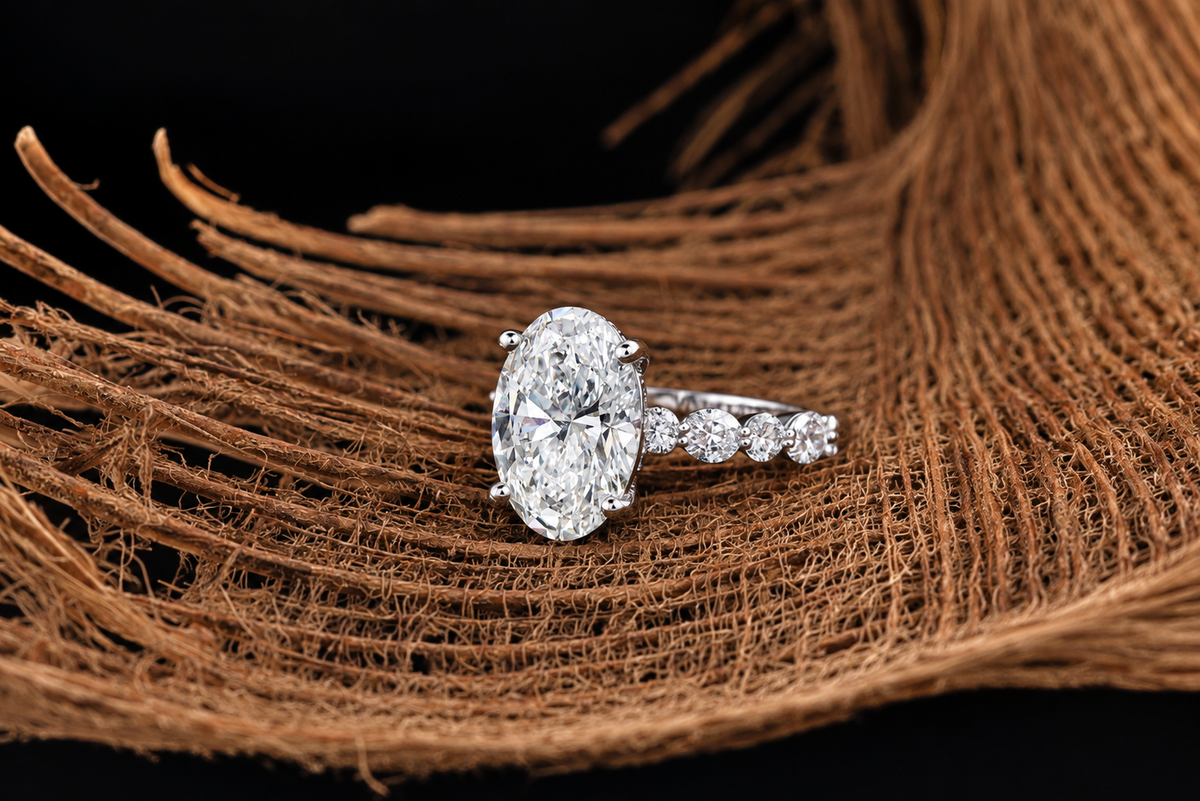
A four-prong setting can make a round diamond feel more open and expose more of its outline.
Six prongs create more points of contact and give a round solitaire a more traditional, balanced appearance.
But this is where simple rules stop being useful.
For an oval, pear, or marquise diamond, the exact location of each prong matters more than the total number.
A slightly misplaced prong can visually shorten an oval or interrupt the elegant point of a pear.
How High Should A Diamond Sit?
This is one of the most important design decisions because height changes both appearance and wearability.
A higher setting can create a dramatic side profile and may allow a wedding band to sit closer underneath.
It can also catch more easily on clothing or objects.
A lower setting feels more integrated with the hand and often suits someone who wants a smoother, easier everyday ring.
If you use your hands constantly, we would usually factor that into the design rather than choosing height from a photograph alone.
The setting should make sense in motion.
Is A Bezel Better Than Prongs?
Not universally. It simply creates a different relationship between the diamond and the metal.
A bezel surrounds most or all of the diamond’s edge, offering strong protection and a smooth profile.
It can feel clean, modern, and sculptural.
Prongs create more openness around the diamond and allow more of the stone’s outline to remain visible.
If you love an airy solitaire, a bezel may feel too enclosed. If you want something sleek and low-profile, it may be exactly right.
The Tradeoff To Understand: Protection Versus Openness
More metal around the diamond generally means more edge protection.
Less metal usually creates a lighter, more exposed look.
Neither direction is automatically better.
The strongest design is the one that gives you enough protection without changing the personality you wanted from the ring.
What If The Diamond Has An Inclusion Near The Edge?
Then placement becomes even more important.
Most inclusions do not create a durability problem, but a significant feather or another feature close to the girdle may affect where pressure should be applied during setting.
Sometimes a prong can help protect that area.
In another case, placing a prong directly over a vulnerable feature may not be the best choice.
This is why the jeweler needs to examine the actual diamond before finalizing the setting plan.
The grading report gives useful information. The stone itself tells the rest of the story.
Can You Put An Old Diamond Into A New Setting?
Often, yes.
This is one of the most meaningful ways to redesign jewelry.
Maybe you have an heirloom diamond that feels special but the original ring no longer fits your style. Maybe the mounting is worn. Maybe you simply want the diamond to feel more like you.
Before resetting it, we would inspect the stone for chips, abrasions, wear along the girdle, and any features that might affect the new design.
Then the setting can respond to the diamond rather than treating it like a blank, interchangeable center stone.
What If The Existing Setting Is Almost The Right Size?
“Almost” is where we become careful.
A diamond should not be forced into a mounting because the measurements are close.
If the stone is too large, the prongs may not seat correctly. If it is too small, the stone may not be held securely or may sit awkwardly.
In some cases, a mounting can be modified.
In others, rebuilding the head or choosing a different setting is the better answer.
Trying to make the wrong setting work can create a compromise you see every day.
How Do Halo And Pavé Designs Change The Setting Process?
They add more relationships to manage.
With a halo, the spacing between the center diamond and surrounding stones needs to feel intentional. Too much space can make the halo look disconnected. Too little can crowd the center stone.
Pavé adds another layer because each small diamond has its own tiny setting.
Then there is the wedding band.
If the ring will be part of a bridal stack, the height and shape of the center setting should be considered early so the band sits the way you expect.
That is why setting the center diamond is never really an isolated decision.
Rudy Santayana’s Perspective On Setting A Diamond
At Rudy Santayana, we see the setting as part of the diamond’s personality.
The stone may already be beautiful on its own, but the way it is framed changes everything: how large it feels, how light it looks, how protected it is, and how naturally it fits your hand.
That is where craftsmanship becomes visible without needing to call attention to itself.
The setting should not fight the diamond.
It should make the diamond feel more like itself.
What Should You Bring If You Want A Diamond Set?
If you already own the diamond, bring the stone and any grading report or documentation you have.
If it is still mounted in another piece, bring the complete ring or jewelry item. The original setting can tell us a lot about previous wear and how the diamond has been supported.
Then think about the details that actually matter to you:
-
Do you want the stone low or elevated?
-
Do you prefer prongs or a bezel?
-
Will the ring sit beside a wedding band?
-
Do you want a clean solitaire or additional diamonds?
-
Is everyday durability a major priority?
Once those answers are clear, the setting becomes much easier to design.
A diamond should not simply fit into a ring.
It should feel like the ring was built around it.