Ultimate Checklist for Comparing Lab vs Natural Diamond Rings
Lab Diamond Rings: Are They Really Worth It in 2026?
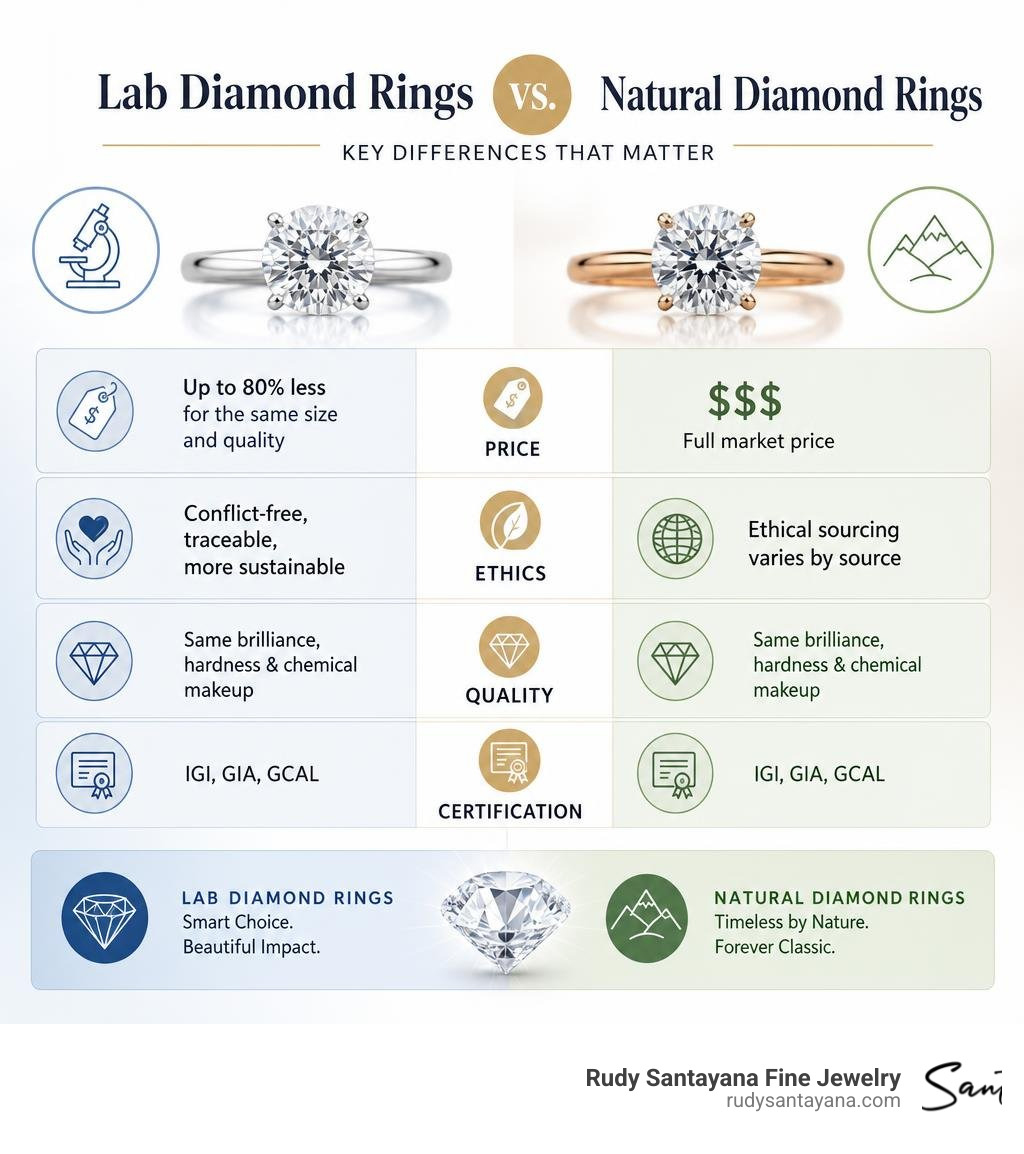
A lab diamond ring offers the same brilliance, hardness, and chemical makeup as a mined diamond — at a fraction of the price. Here's a quick snapshot before we dive deeper:
| Feature | Lab Diamond Ring | Natural Diamond Ring |
|---|---|---|
| Chemical composition | 100% carbon (identical) | 100% carbon |
| Hardness (Mohs scale) | 10 | 10 |
| Visual difference | None to the naked eye | None to the naked eye |
| Price difference | Up to 80% less | Full market price |
| Ethical sourcing | Conflict-free, traceable | Varies by source |
| Certification | IGI, GIA, GCAL | IGI, GIA, GCAL |
| Trending carat size (2026) | 3–6 carats | 0.5–2 carats (typical budget) |
Over half of couples today are choosing lab-grown diamonds — and it's not hard to see why. You get more stone, more sparkle, and more peace of mind for your budget. But with so many options out there, knowing exactly what to look for — and what separates a great lab diamond ring from a disappointing one — makes all the difference.
This guide gives you a clear, honest checklist so you can compare lab and natural diamond rings side by side and walk away confident in your choice.
I'm Rudy Santayana, a fine jewelry designer based in Miami, Florida, with years of experience helping clients design and select stunning lab diamond rings through our custom design bar in Coral Gables. From solitaires to bespoke bridal sets, I've seen what makes these stones shine — and what questions matter most before you buy.
What is a Lab-Grown Diamond and How Are They Made?
To understand why a lab diamond ring commands so much attention in 2026, we first have to bust a very common myth: lab diamonds are not fake. They are not cubic zirconia, nor are they highly polished glass.
A lab-grown diamond is composed of pure carbon atoms arranged in a crystalline structure. Because they are chemically, physically, and optically identical to earth-mined diamonds, they possess the exact same refractive index, fire, and unmatched hardness that has made diamonds the ultimate symbol of love for centuries.
The Science Behind the lab diamond ring
In nature, diamonds form deep within the Earth's mantle under unfathomable heat and pressure over millions of years. In a laboratory, scientists replicate these exact conditions using two advanced technological methods:
- HPHT (High Pressure High Temperature): This method mimics the Earth’s natural geological engine. A tiny diamond seed is placed in a press alongside pure carbon and subjected to temperatures exceeding 2,000°C and pressures of over 1.5 million pounds per square inch. The carbon melts and crystallizes around the seed, growing a beautiful, raw diamond.
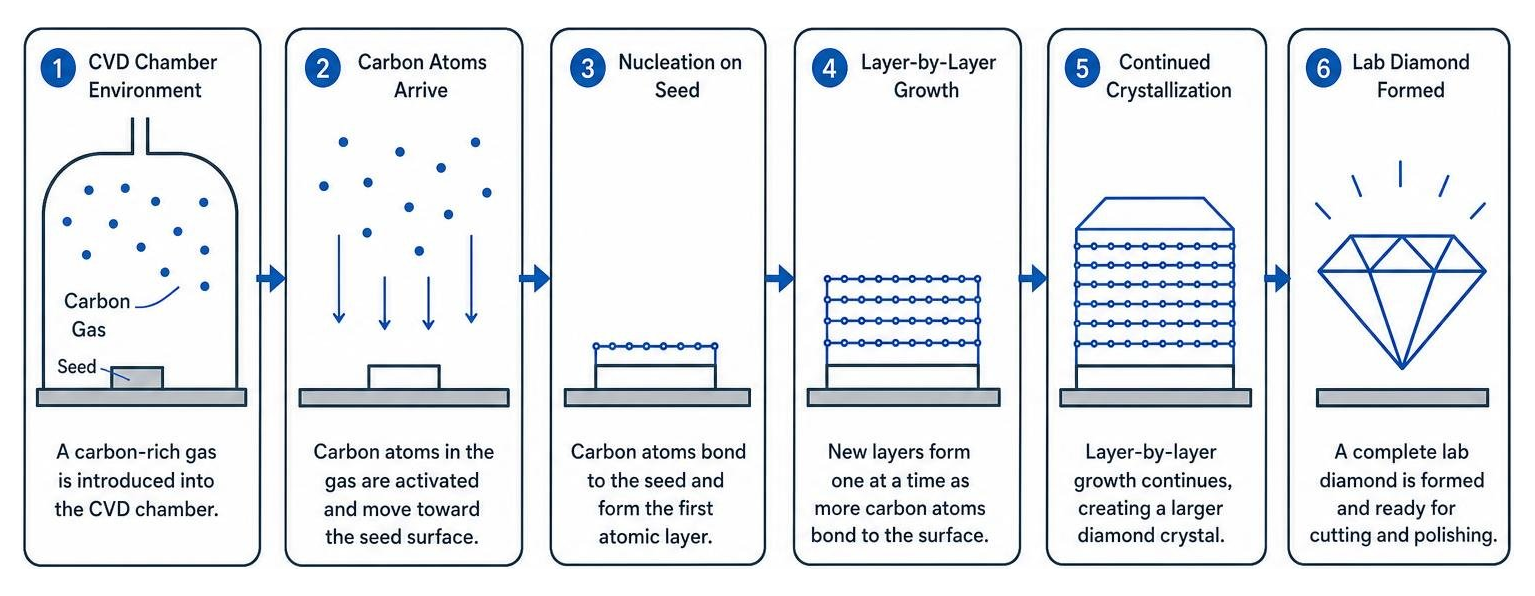
- CVD (Chemical Vapor Deposition): Think of this as 3D printing a diamond from gas. A diamond seed is placed in a vacuum chamber filled with carbon-rich gas (like methane). When superheated plasma is introduced, the gas molecules break apart, and pure carbon rains down onto the seed layer by layer, building a flawless crystal structure over several weeks.
Both methods yield genuine, high-quality lab diamonds that are physically indistinguishable from those pulled from the ground. Whether grown via HPHT or CVD, the resulting stone is ready to be cut, polished, and set into a stunning heirloom piece.
The Ultimate Comparison Checklist: Lab vs. Natural Diamonds
When deciding between a lab-created and a mined diamond, it helps to work through a structured checklist. Here is how they stack up across the key categories:
- The 4Cs (Cut, Color, Clarity, Carat Weight): Both types of diamonds are graded on the exact same scale by major gemological institutes. A lab-grown diamond can achieve the absolute highest grades of colorless perfection (D-F) and clarity (VVS-FL).
- Durability & Longevity: Both register a perfect 10 on the Mohs hardness scale. A lab-grown diamond will never cloud, scratch, or lose its fiery sparkle over time. It is built to last for generations.
- Refractive Index: Both stones measure 2.42, meaning they bend and bounce light in the exact same mesmerizing way.
To help you visualize the comparison, we have mapped out this quick-reference checklist:
| Checklist Item | Lab-Grown Diamond | Natural Diamond | Winner |
|---|---|---|---|
| Hardness & Scratch Resistance | 10/10 on Mohs Scale | 10/10 on Mohs Scale | Tie |
| Brilliance & Fire | Identical Light Performance | Identical Light Performance | Tie |
| Grading Standards | Full GIA, IGI, or GCAL Reports | Full GIA, IGI, or GCAL Reports | Tie |
| Average Cost (2-Carat) | Highly Affordable ($1,500 - $3,000) | Premium Pricing ($10,000 - $25,000+) | Lab-Grown |
| Resale Value Retention | Low (Priced for wear, not investment) | Moderate to High (Retains market value) | Natural |
| Environmental Impact | Minimal land and water disruption | Significant mining footprint | Lab-Grown |
Visual and Physical Identity of a Lab-Grown Diamond
If you were to place a lab-grown diamond ring next to a natural diamond ring on a table, even a seasoned gemologist could not tell them apart with the naked eye. In fact, standard jeweler’s loupes and magnifying tools are completely useless for distinguishing the two.
The differences are microscopic and lie entirely in how the crystal grew. Natural diamonds grow in octahedral shapes over millions of years, leaving behind specific natural nitrogen inclusions. Lab-grown diamonds, depending on whether they were grown via HPHT or CVD, exhibit cuboctahedral or flat growth patterns.
To identify these patterns, a gemologist must use highly specialized laboratory equipment that analyzes light wavelengths and microscopic growth lines. Because they are physically identical, they are easily the best diamond alternatives for anyone who wants the authentic look, feel, and wearability of a diamond without the associated mined price tag.
Price, Value, and Budget Advantages of Lab-Grown Diamonds
Let’s talk about the most obvious advantage: the price tag. When you choose a lab diamond ring, you bypass the incredibly complex supply chains, heavy machinery, and geopolitical markups associated with traditional diamond mining.
These savings are passed directly to you. On average, a lab-grown diamond engagement ring costs up to 80% less than a mined diamond of the same size and quality. To put that into perspective, a budget that would only secure a modest 1-carat natural diamond can easily fund a jaw-dropping 3-carat to 4-carat lab-grown masterpiece with superior color and clarity grades.
In 2026, we are seeing a massive trend toward larger carat weights. Couples in Miami and Coral Gables are frequently opting for center stones in the 3 to 6-carat range. Because lab diamonds optimize your budget so effectively, you don't have to compromise on the size of the stone or the complexity of the setting. If you've ever wondered how much do diamond rings cost, you'll find that lab-grown options open up a whole new world of luxury designs that were once considered out of reach.
However, it is important to understand how value is defined. Mined diamonds retain a portion of their resale value over time due to their scarcity. Lab-grown diamonds, while incredibly valuable for their daily wear, emotional significance, and initial cost savings, do not hold a high resale value.
Instead, their value lies in the upfront savings and lower insurance replacement costs. Most couples find that saving thousands of dollars on the initial purchase far outweighs any hypothetical future resale value—after all, an engagement ring is meant to be kept forever, not sold!
Ethical, Sustainable, and Certification Standards
For the modern, eco-conscious couple, the decision to go lab-grown is deeply rooted in personal values. Traditional diamond mining involves moving tons of earth, which can result in significant land displacement and water usage.
In contrast, producing a lab-grown diamond requires up to 90% less water and causes virtually zero land disruption. By selecting a lab-grown stone and pairing it with recycled precious metals, you can design a piece of jewelry that aligns perfectly with a sustainable lifestyle.
When it comes to verifying the quality of your stone, you should never rely on guesswork. Reputable lab diamonds are graded by the exact same independent gemological laboratories that evaluate mined stones:
- IGI (International Gemological Institute): The pioneer in grading lab-grown stones, providing highly detailed reports on the 4Cs.
- GIA (Gemological Institute of America): The gold standard of diamond grading, offering full digital and physical reports for lab-created diamonds. You can learn more about their grading standards directly on the official GIA website.
- GCAL (Gemological Certificate & Assurance Lab): Known for its strict grading standards and optical brilliance analysis.
For a unique and highly personalized look, many modern designs also feature a mix of stones. For example, you can pair a brilliant lab center diamond with vibrant green accents, such as a lab-grown emerald, to create a striking contrast of colors and textures.
Choosing Certified lab diamond ring Settings
Once you have selected your certified diamond, the next step is choosing the metal that will hold it secure for a lifetime. The metal type you choose plays a huge role in the ring's overall durability and aesthetic:
- 14K Gold (Yellow, White, or Rose): Highly durable and perfect for intricate, everyday wear because the gold is alloyed with other metals for added strength.
- 18K Gold: Offers a richer, warmer color profile with a higher gold purity, making it highly luxurious.
- Platinum: The ultimate hypoallergenic metal. It is naturally white, incredibly dense, and develops a beautiful patina over time without ever wearing away.
Securing a large center stone requires a thoughtful setting design. When you learn how to choose a diamond ring setting, you'll want to balance your aesthetic preferences with practical safety features, such as sturdy 4-prong or 6-prong claws, or even a protective bezel setting.
How to Choose the Perfect lab diamond ring for Everyday Wear
Designing your dream ring is all about matching your personal style with your daily lifestyle. If you are looking for local inspiration, you can browse stunning collections of lab-grown diamonds in Miami to see how different shapes catch the light.
Here are some of the most popular design styles taking center stage in 2026:
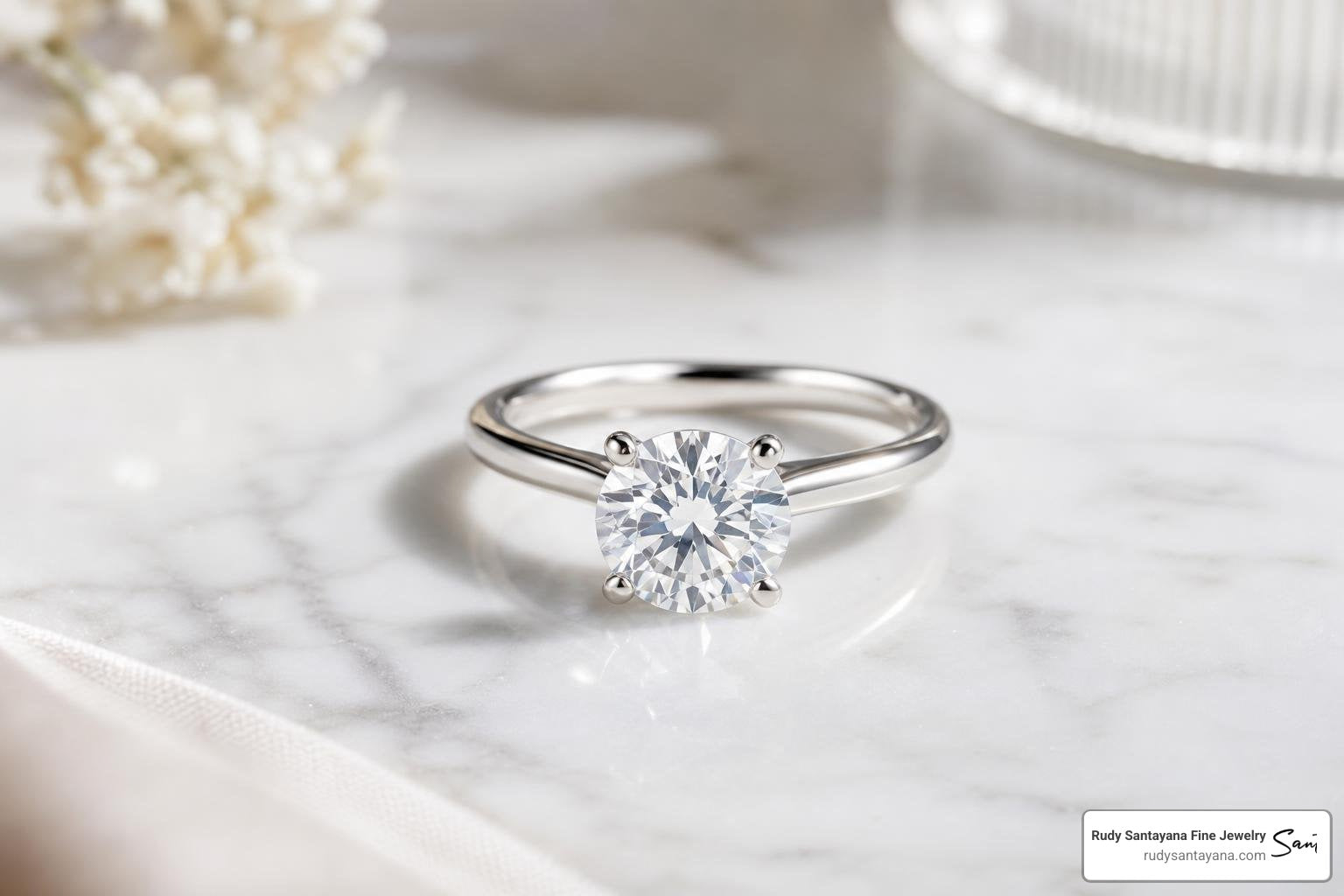
- Solitaire: The timeless classic. A single, magnificent lab-grown diamond held aloft by delicate prongs, allowing maximum light to enter the stone.
- Halo & Hidden Halo: A halo surrounds the center stone with a border of smaller diamonds to maximize sparkle. A hidden halo wraps around the base of the prongs, offering a secret, shimmering detail visible only from the side.
- Three-Stone: Representing your past, present, and future. If you are in the South Florida area, exploring three-stone engagement designs in Coral Gables is a fantastic way to see how beautifully balanced these multi-stone designs can be.
- Toi et Moi (Two-Stone): A highly romantic, trendsetting style featuring two contrasting diamond shapes (like a pear and an emerald cut) sitting side by side.
- East-West Settings: A modern twist where elongated shapes (like marquise, oval, or emerald cuts) are set horizontally across the band rather than vertically.
- Split-Shank: A band that splits into two as it approaches the center stone, creating an airy, delicate, and highly flattering footprint on the finger.
No matter which style you choose, keeping your lab diamond jewelry clean is simple. A weekly soak in warm water with a few drops of mild dish soap, followed by a gentle scrub with a soft-bristled toothbrush, will keep your ring shining like the day you proposed.
Frequently Asked Questions about Lab-Grown Diamonds
Can a jeweler tell if a diamond is lab grown?
No, a jeweler cannot tell the difference using standard tools like a magnifying loupe or thermal diamond tester. Because lab-grown diamonds have the exact same physical and chemical properties as natural diamonds, they react identically to these tests.
To identify a lab-grown diamond, a jeweler must use specialized laboratory equipment designed to detect microscopic growth patterns or read the tiny, microscopic laser inscriptions engraved on the diamond’s girdle by grading labs like the IGI or GIA.
Can a lab-grown diamond ring get wet?
Yes! Since lab diamonds are structurally identical to natural diamonds, they are incredibly durable and completely waterproof. If you have ever wondered can diamond rings get wet, the answer is a resounding yes.
However, we generally advise against wearing your ring in the pool or ocean because cold water can shrink your fingers, causing the ring to slip off. Additionally, while you can technically wear it, knowing if can a diamond ring be worn in the shower comes down to soap residue. Over time, body washes and moisturizing soaps can leave a dull film on your stone, requiring more frequent cleanings to restore its original brilliance.
How do I find my correct ring size at home?
The most reliable way to find your ring size at home is to use a printable plastic or paper ring sizer at 100% scale. When measuring, keep these three golden rules in mind:
- Measure at the end of the day: Your fingers are at their largest when they are warm, typically in the evening.
- Avoid cold measurements: Cold temperatures cause fingers to shrink temporarily.
- Account for the knuckle: Make sure the sizer can slide comfortably over your knuckle with a slight bit of resistance. If you find yourself between two sizes, always opt for the larger size for a comfortable fit.
Conclusion
Choosing a lab diamond ring is a brilliant way to celebrate your love story. It offers a beautiful combination of modern innovation, sustainable luxury, and incredible value, allowing you to design a breathtaking ring without compromise.
At Rudy Santayana Fine Jewelry, we specialize in bringing your unique vision to life. From selecting the perfect certified lab-grown center stone to handcrafting a custom setting in our Coral Gables design studio, we are here to guide you every step of the way. Whether you want to explore lab diamonds for an engagement, design a pair of custom artificial diamond studs, or dive into our custom made diamond pendants guide 2026, our team is dedicated to providing superior, personalized service.
Ready to take the next step? Let us help you find the perfect engagement ring with rudy santayana jewelry. Stop by our South Florida location or book a custom design consultation today, and let’s create something extraordinary together!