A Quick Start Guide to Engagement Rings
What You Need to Know About Engagement Rings Before You Buy
Engagement rings are one of the most meaningful purchases you will ever make. They mark a commitment, tell a story, and are worn every single day for a lifetime.
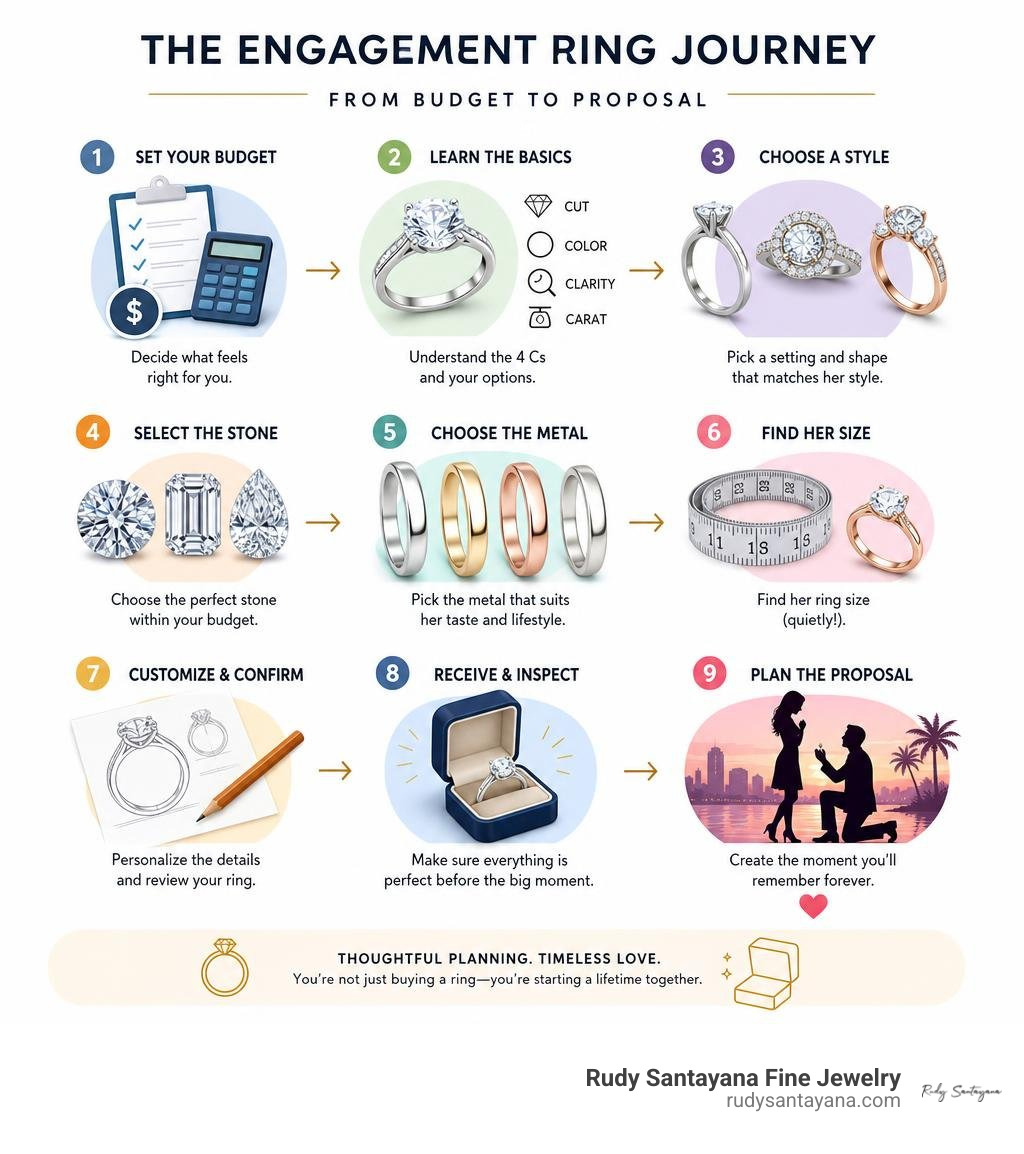
Here is a quick overview of everything this guide covers:
- Styles and settings — solitaire, halo, bezel, three-stone, and more
- Diamond shapes — round, oval, emerald, pear, cushion, marquise, and princess
- The Four Cs — cut, color, clarity, and carat weight
- Stone options — natural diamonds, lab-grown diamonds, and moissanite
- Metals — platinum, white gold, yellow gold, and rose gold
- Budget guidance — how much to actually spend
- Ring sizing — how to find her size before a surprise proposal
- Customization — how to design a ring from scratch
- Care and maintenance — how to keep it looking its best
Whether you are just starting to explore or ready to buy, this guide walks you through every decision — clearly and without the jargon.
I'm Rudy Santayana, a fine jewelry designer based in Coral Gables, Miami, with years of experience crafting custom engagement rings for clients who want something truly personal and beautifully made. From one-of-a-kind bespoke designs to expert bridal services, my studio handles every detail from first sketch to final polish.
Choosing the Perfect Engagement Rings: Styles and Settings
When looking for engagement rings, it is easy to get overwhelmed by the endless options. To make sense of it all, we like to separate a ring into two main elements: its aesthetic "personality" (the style) and its physical "architecture" (the setting).
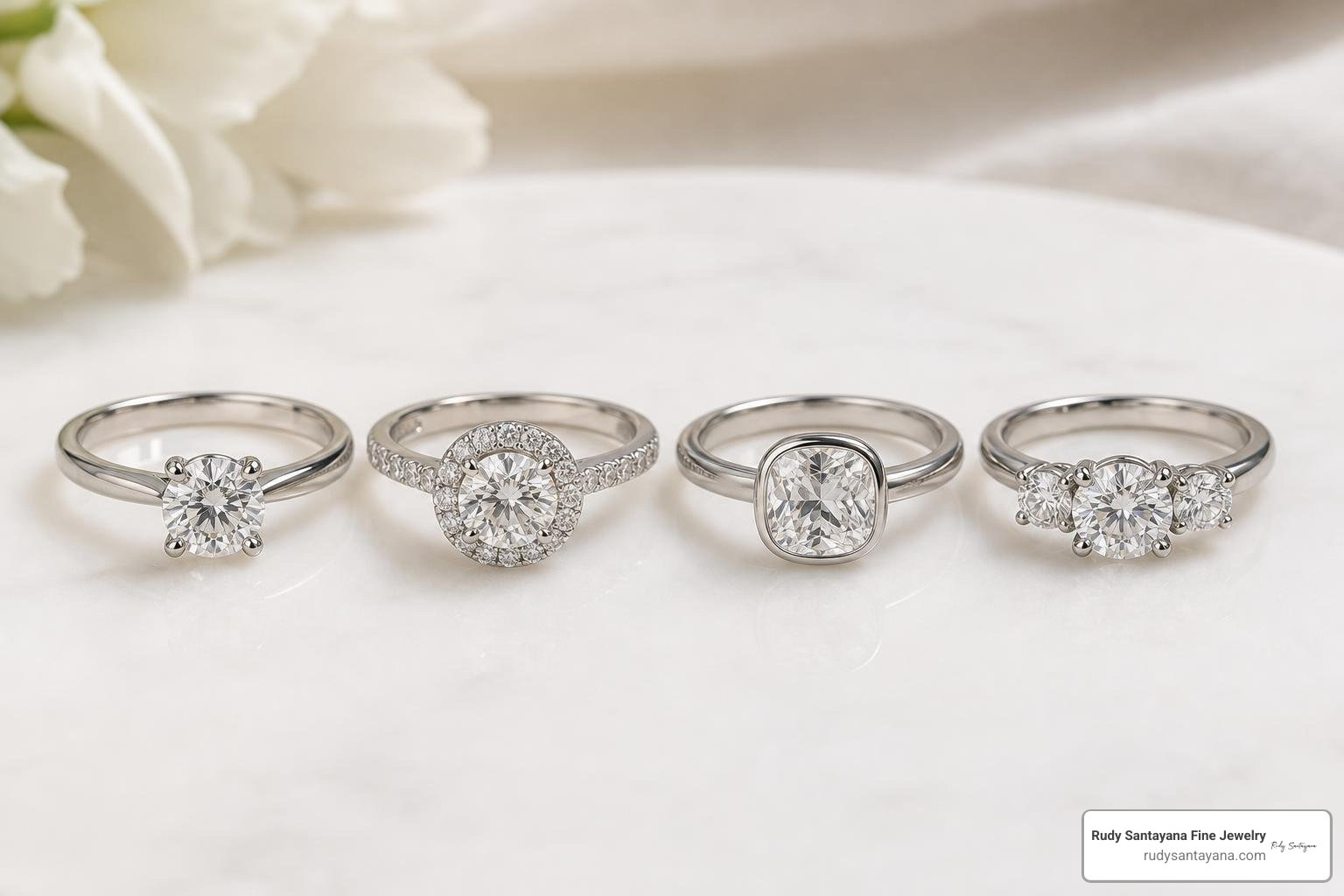
The style represents the overall design theme—such as vintage, modern, minimalist, or nature-inspired—while the setting refers to the physical structure holding the center stone securely in place. Choosing the right combination ensures your ring not only looks spectacular but also fits your partner's everyday lifestyle. For a deep dive into these structural elements, explore our guide on How to Choose a Diamond Ring Setting.
Let us look at the most popular setting architectures you will encounter:
- Solitaire Settings: The absolute definition of timeless elegance. A solitaire features a single center diamond set on a plain or simple metal band. This style places 100% of the focus on the beauty of your center stone.
- Halo Settings: This architecture features a brilliant circle of smaller pavé-set diamonds surrounding the center stone. A halo acts like an optical illusion, making the center diamond look significantly larger and more radiant than it is.
- Hidden Halo Settings: A modern twist on the classic halo, where a subtle circle of miniature diamonds is placed just beneath the main stone's girdle. It is designed to be seen primarily from the side profile rather than top-down.
- Bezel Settings: Instead of securing the stone with prongs, a bezel setting wraps a continuous protective rim of precious metal around the edge of the gemstone. This is the ultimate choice for active individuals with hands-on professions, as it prevents snagging and protects the stone from accidental chips.
- Three-Stone (Trilogy) Settings: Featuring one central diamond flanked by two slightly smaller side stones, this style traditionally symbolizes a couple's past, present, and future together.
- Cathedral Settings: Drawing architectural inspiration from Gothic arches, a cathedral setting uses sweeping slopes of metal to lift the center stone high above the band. This dramatic elevation allows maximum light to enter the diamond from all angles.
Popular Setting Architectures
Beyond the primary settings, the finer details of the band and mounting play a massive role in the ring's final look. Here are some of the popular structural accents we work with:
- Prong Settings: Typically using four or six metal prongs, this is the most common way to secure a diamond. A four-prong setting offers a cleaner, more minimalist look, while a six-prong "tiara" style provides maximum security and creates a majestic, crown-like symmetry around round stones.
- Tension Settings: Using the high-tensile strength of the metal band itself to squeeze the stone in place, making the diamond appear as though it is floating in mid-air.
- Pavé Settings: Derived from the French word for "paved," this technique involves setting tiny diamonds closely together along the band with minimal metal showing, making the band look literally paved with continuous sparkle.
- Split-Shank: A design where the band splits into two as it approaches the center stone, creating an elegant frame and adding visual weight to the piece.
- Toi et Moi: French for "you and me," this romantic style features a gemstone duet set side-by-side. It often pairs contrasting shapes or colors—like a vibrant green emerald alongside a brilliant pear-cut diamond—to symbolize two unique souls joining together.
- East-West Settings: A contemporary design choice where elongated diamond shapes (like emerald, oval, or marquise cuts) are oriented horizontally across the finger rather than vertically.
The Difference Between Wedding Bands and Engagement Rings
A common point of confusion for first-time buyers is the distinction between an engagement ring and a wedding band.
An engagement ring is traditionally presented during the proposal. It is designed to make a statement, typically featuring a prominent "hero" gemstone or center diamond.
A wedding ring (or wedding band) is exchanged during the marriage ceremony. These bands tend to be more understated, though they can range from simple, classic metal bands to sparkling eternity rings.
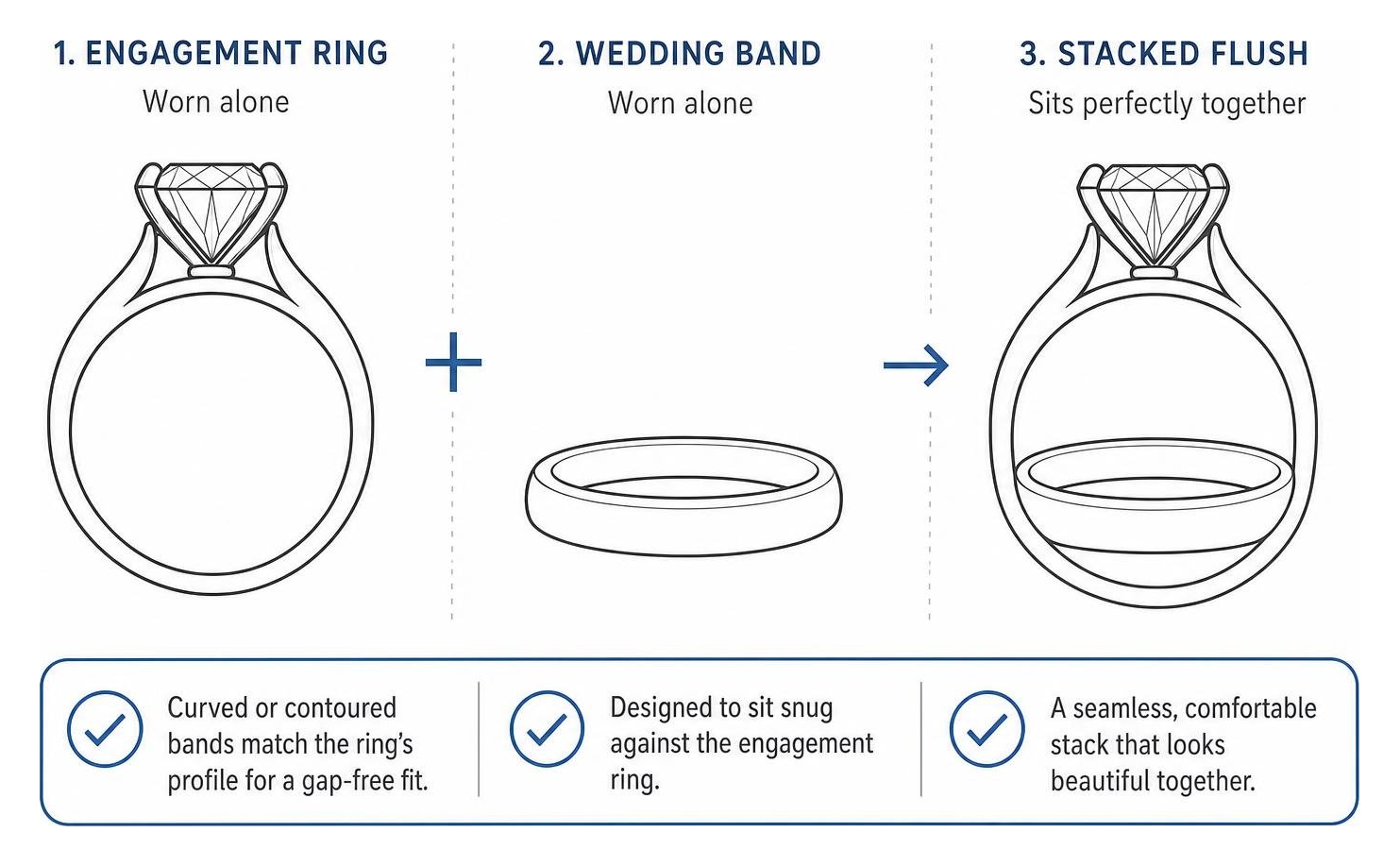
Many modern couples prefer their rings to sit completely flush against each other without any gaps. To achieve this seamless look, we recommend looking into a cohesive Custom Wedding Rings Sets. Choosing a matched set takes the guesswork out of finding a coordinating band later. You can even collaborate with us to Build Your Own Bridal Set or design a completely personalized Custom Bridal Set that perfectly reflects your style.
Understanding Diamonds and Gemstones
The center stone is the undisputed star of the show. While classic diamonds remain the most popular choice, today's couples have an incredible array of shapes, cuts, and stone types to choose from.
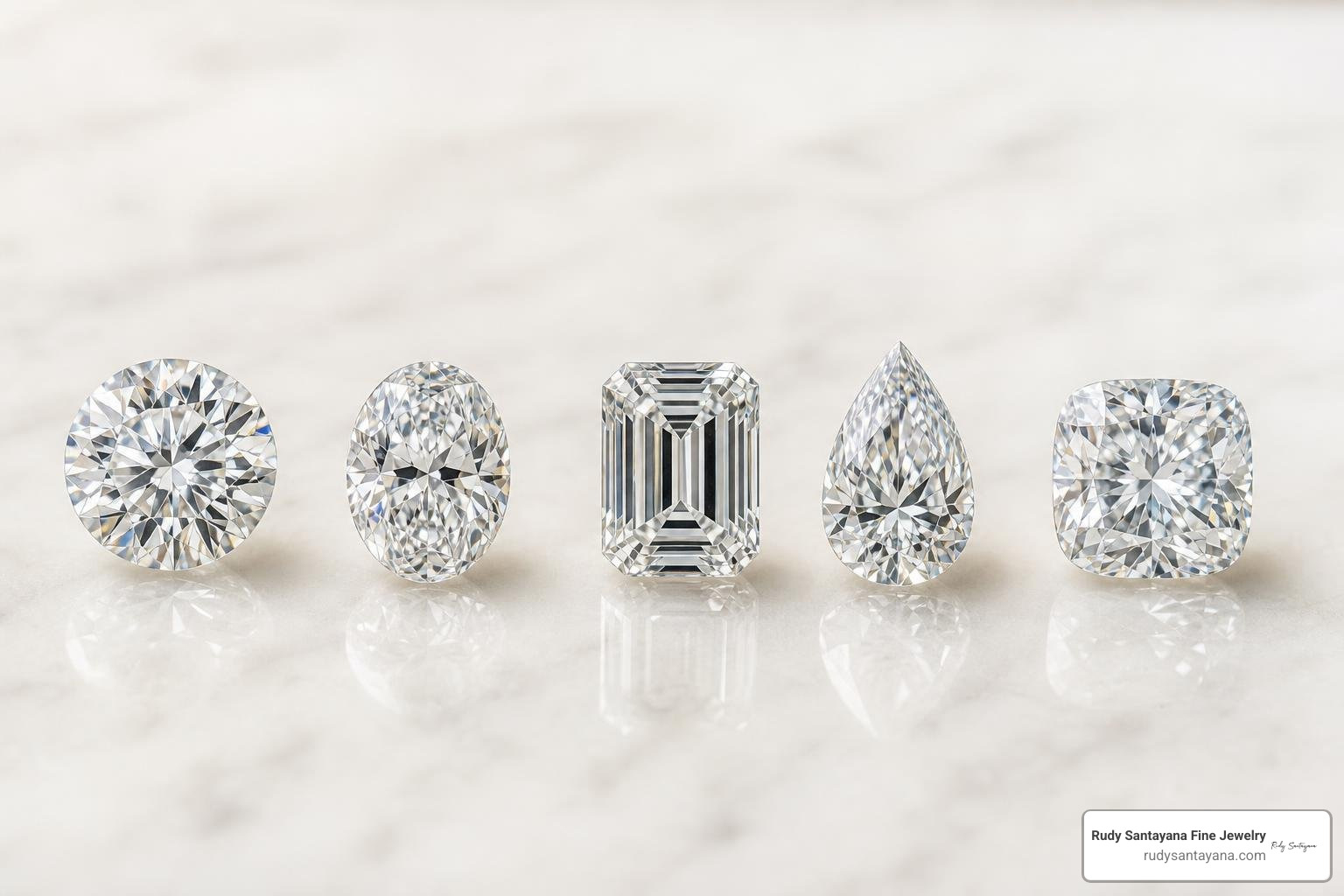
Before you begin shopping, it helps to understand the difference between a diamond's shape (its outline when viewed from the top) and its cut (the arrangement of its facets). Whether you prefer the classic brilliance of a round cut, the modern lines of a princess cut, or the vintage elegance of an emerald cut, your choice should reflect your partner's personal aesthetic. If you want to select your stone independently of the setting, check out our guide on How to Buy a Loose Diamond.
The Four Cs of Diamond Quality
Every diamond's quality and value are universally graded using the "Four Cs" established by the Gemological Institute of America (GIA):
- Cut: This is the most critical of the Four Cs because it directly determines how much the diamond sparkles. A well-cut diamond reflects light beautifully from facet to facet, while a poorly cut stone will look dull, regardless of its size.
- Color: Graded on a scale from D (completely colorless) to Z (light yellow or brown). Colorless diamonds are the rarest and most valuable, though near-colorless stones (grades G through J) offer fantastic value as they appear white to the naked eye when set in jewelry.
- Clarity: Measures the presence of internal characteristics called "inclusions" or external marks called "blemishes." The scale ranges from Flawless (FL) to Included (I). Most microscopic inclusions do not affect the stone's beauty, meaning "eye-clean" diamonds are highly sought after for their balance of quality and price.
- Carat Weight: This is the measure of the diamond's physical weight, not its physical size.
When budgeting, keep in mind that diamond prices rise exponentially as carat weight increases. For example, a single 5-carat or 6-carat diamond is significantly rarer - and therefore far more expensive - than several smaller diamonds that add up to the same weight. If you are curious about how carat weight impacts cost, you can explore our detailed pricing breakdowns:
- How Much Is a 5 Carat Diamond Ring
- How Much Is a 6 Carat Diamond Ring
- How Much Is a 7 Carat Diamond Ring
- How Much Is a 8 Carat Diamond Ring
- How Much Is a 13 Carat Diamond Ring
- How Much Is a 17 Carat Diamond Ring
Natural Diamonds vs. Lab Diamonds vs. Moissanite
In July 2026, the jewelry market offers more choices than ever before. Modern couples are no longer restricted to traditional mined stones. Let us look at how natural diamonds, lab-grown diamonds, and moissanite compare:
| Feature | Natural Diamonds | Lab-Grown Diamonds | Moissanite |
|---|---|---|---|
| Chemical Composition | Pure Carbon ($C$) | Pure Carbon ($C$) | Silicon Carbide ($SiC$) |
| Hardness (Mohs Scale) | 10 (Hardest known mineral) | 10 (Hardest known mineral) | 9.25 (Extremely durable) |
| Refractive Index | 2.42 (Classic brilliance) | 2.42 (Classic brilliance) | 2.65 - 2.69 (High "rainbow" fire) |
| Origin | Mined from the Earth | Grown in a controlled laboratory | Originally found in meteorites (now lab-created) |
| Relative Cost | Premium pricing | Moderate (typically 60-80% less than natural) | Budget-friendly |
For those interested in the technological marvel of modern stones, Lab Diamonds and Lab Diamond Jewelry provide the exact same physical, chemical, and optical properties as mined diamonds, but at a fraction of the cost.
If you are looking for alternative options that maximize your budget while offering incredible durability, there are several fantastic options available. You can read more about these in our guide to the Best Diamond Alternatives.
Metals, Sizing, and Budgeting
Selecting the right precious metal for the band is just as important as choosing the center stone. The metal you choose defines the ring's color profile, maintenance needs, and overall durability.
- Platinum: The strongest and most durable of the white precious metals. Platinum is naturally hypoallergenic and does not require rhodium plating to maintain its bright white color over time. It develops a warm, satin-like finish called a "patina" with wear, which many collectors love.
- White Gold: A classic, bright white choice. Because gold is naturally yellow, white gold is alloyed with white metals and finished with a thin layer of rhodium plating. This plating will naturally wear off over time and requires quick replating every few years to keep its brilliant luster.
- Yellow Gold: A timeless, warm choice that has enjoyed a massive resurgence in popularity. It beautifully complements colorless diamonds and offers a traditional, romantic aesthetic.
- Rose Gold: Created by alloying pure gold with copper, rose gold offers a soft, vintage-inspired pink hue. It is highly durable and looks exceptionally romantic. Learn more about styling this gorgeous metal with our guide to the 14k Rose Gold Wedding Band.
How Much Should You Spend on Engagement Rings?
There is an old, persistent rumor that you must spend two to three months of your salary on an engagement ring. We are here to tell you: forget that rule.
The right amount to spend is entirely personal. It should be a comfortable figure that fits your actual financial situation, not an outdated marketing guideline. Today, you can find stunning, high-quality engagement rings at almost any price point. To understand how various design choices, diamond types, and metal weights influence the final price tag, read our comprehensive guide on How Much Do Diamond Rings Cost.
Finding the Right Ring Size Discreetly
Planning a surprise proposal is incredibly exciting, but figuring out your partner's exact ring size without giving away the secret can feel like a covert mission. Here are a few tried-and-true tricks:
- The Jewelry Box Raid: Borrow a ring they already wear on their ring finger (or middle finger) and trace the inside circle on a piece of paper, or press it into a bar of soap to create an impression.
- The Trusted Confidante: Ask a close friend or family member if they happen to know the size, or have them casually bring up jewelry in conversation to find out.
- Size Up, Not Down: When in doubt, always go slightly larger. It is structurally much easier for a professional jeweler to resize a ring down than it is to stretch it larger.
Frequently Asked Questions
Can engagement rings be customized from scratch?
Absolutely! Designing a bespoke ring is one of the most rewarding ways to celebrate your unique love story. At Rudy Santayana Fine Jewelry, we specialize in taking your initial ideas—whether they are rough sketches or a collection of inspiration photos—and turning them into realistic CAD (Computer-Aided Design) renderings. This collaborative process allows you to review every angle, prong placement, and proportion before our master craftsmen handcraft the final piece. To learn more about how we bring these visions to life, explore The Art of Custom Made Jewelry.
How do you care for and maintain an engagement ring?
To keep your ring sparkling like the day you proposed, follow these simple care practices:
- Clean it regularly: Soak the ring in warm water with a few drops of mild dish soap, then gently scrub it with a soft-bristled toothbrush to remove everyday oils and lotion buildup.
- Avoid harsh chemicals: Take your ring off before swimming in chlorinated pools, using household cleaning products, or applying heavy lotions and perfumes.
- Schedule professional inspections: Bring your ring to a professional jeweler once or twice a year to check that the prongs are tight and the stones are completely secure.
- Know when to take it off: Remove your ring during high-impact physical activities, gardening, or heavy lifting to prevent scratching the metal or bending the prongs.
Also, keep in mind that some styles—like white gold—require periodic rhodium replating to maintain their bright, silvery-white finish over the years.
How do you wear a pear-shaped diamond ring?
The pear-shaped diamond (often called a teardrop) is a stunning, elegant cut that offers a unique look. The most common way to wear a pear-shaped ring is with the pointed end facing toward your fingernails. This orientation elongates the appearance of the fingers. However, there are no strict rules—some brides prefer pointing it toward the wrist for a modern twist. For a complete guide on styling and pairing this unique cut with bands, read our article How Do You Wear a Pear Shaped Diamond Ring.
Furthermore, if you are a single woman who simply loves the look of fine jewelry, you might wonder about the modern etiquette surrounding these beautiful pieces. You will find all the answers in our article, Can a Single Woman Wear a Diamond Ring.
Conclusion
Choosing an engagement ring is a beautiful milestone. From selecting the perfect setting architecture to finding a diamond that fits your budget and values, the journey should be just as memorable as the proposal itself.
At Rudy Santayana Fine Jewelry in Coral Gables, Florida, we are dedicated to making this process clear, enjoyable, and completely personalized. We take pride in our handcrafted, innovative designs and our commitment to exceptional customer service.
Ready to begin your journey? Let us help you design something extraordinary. Find the Perfect Engagement Ring with Rudy Santayana Jewelry today.