The Ultimate Guide to Finding Artificial Diamonds for Sale Without Getting Fooled
Why Smart Shoppers Are Choosing Artificial Diamonds for Sale in 2026
Artificial diamonds for sale are everywhere right now — and for good reason. You can get a stunning, certified, real diamond for 50% to 80% less than a mined stone of the same size and quality.
Here is a quick snapshot of what you need to know:
| What You Want to Know | The Short Answer |
|---|---|
| Are lab-grown diamonds real diamonds? | Yes — identical chemical, physical, and optical properties to mined diamonds |
| How much cheaper are they? | Typically 50–80% less than comparable natural diamonds |
| Are they certified? | Yes — by GIA, IGI, and other major labs |
| Can you tell them apart from mined diamonds? | Not with the naked eye — only specialized equipment can detect the difference |
| Can they be used in custom jewelry? | Absolutely — rings, pendants, earrings, and more |
| Do they come in different shapes and sizes? | Yes — round, oval, cushion, emerald, pear, marquise, and many more |
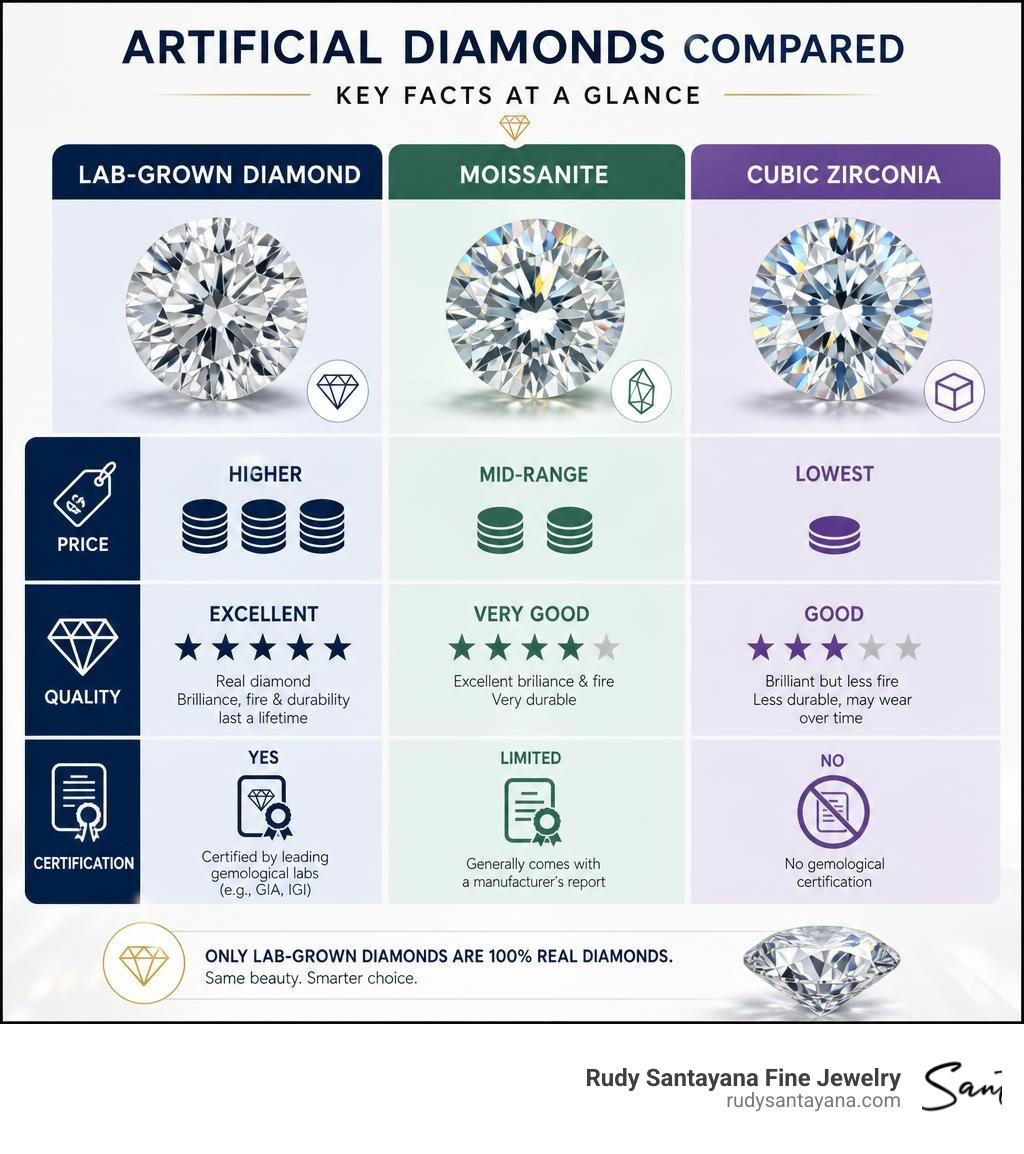
But here is where many buyers run into trouble: not all artificial diamonds are the same, and the market is full of lookalikes — like moissanite and cubic zirconia — that are not diamonds at all. Knowing the difference before you buy protects you from overpaying for the wrong thing or underpaying for something that won't hold up to scrutiny.
This guide walks you through everything — from how lab diamonds are made, to how they are graded, to how to find the right one for a piece of custom jewelry you will love for decades.
I'm Rudy Santayana, a fine jewelry designer based in Miami, Florida, with years of hands-on experience helping clients find and design custom pieces featuring artificial diamonds for sale at every price point. Whether you're designing a one-of-a-kind engagement ring or upgrading a treasured heirloom, I'll help you navigate this market with confidence.
What Are Lab-Grown Diamonds and How Are They Made?
To understand why artificial diamonds for sale are such a massive breakthrough, we have to look at how they are created. A common misconception is that these stones are "fake" or made of cheap plastic. In reality, they are 100% real diamonds, consisting of pure carbon crystallized in an isotropic 3D form.
Instead of waiting billions of years for the Earth's mantle to crush carbon into a gemstone, modern gemological scientists replicate those exact natural forces inside specialized laboratory chambers.
The Science Behind Artificial Diamonds for Sale
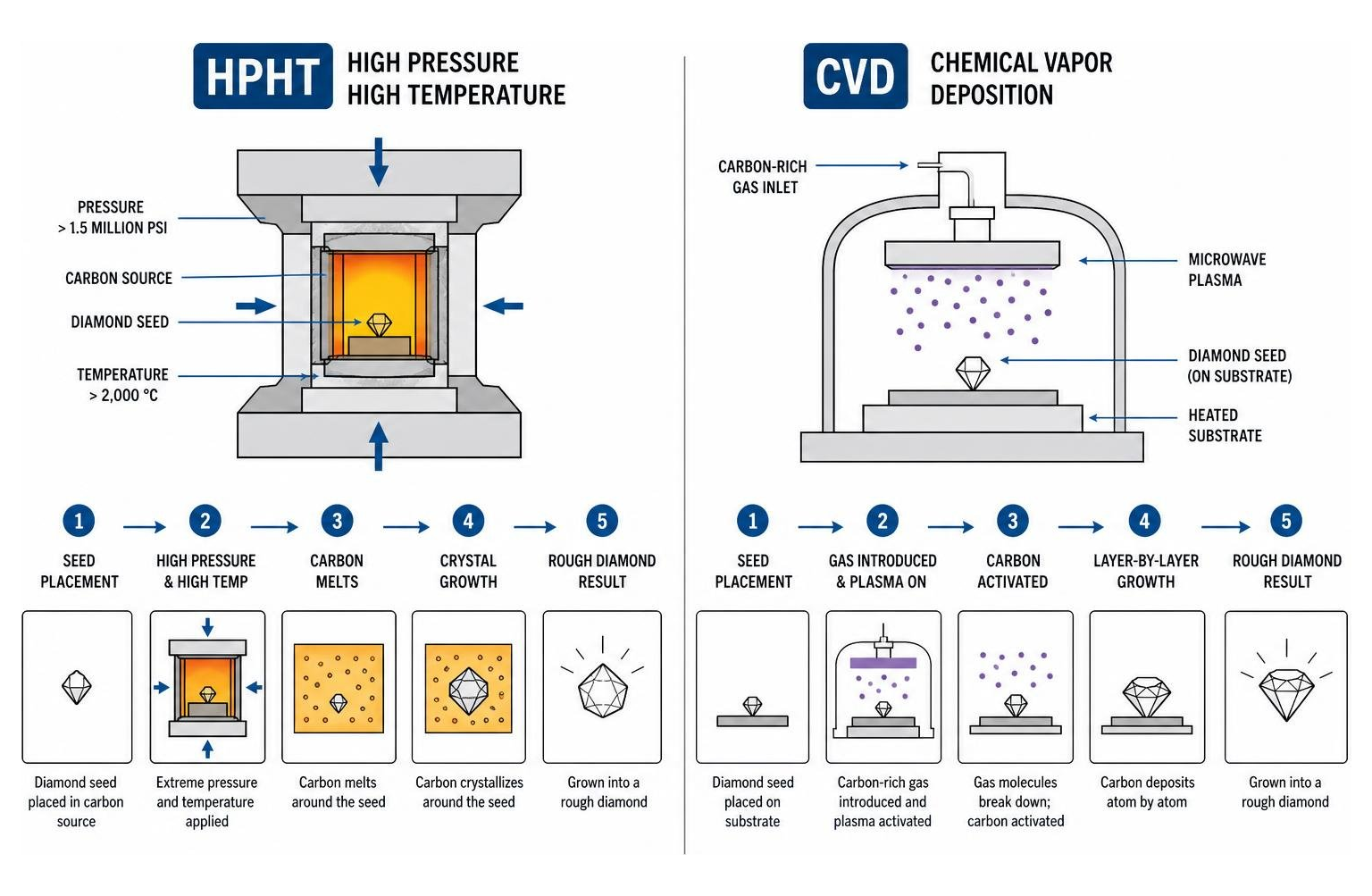
There are two primary methods used to grow high-quality lab diamonds today:
- High Pressure High Temperature (HPHT): This method mimics the extreme geological conditions found deep within the earth. A tiny diamond "seed" is placed in pure carbon and subjected to temperatures exceeding 2,000 degrees Celsius and pressures of over 1.5 million pounds per square inch. Under these conditions, the carbon melts and crystallizes around the seed, growing atom by atom into a rough diamond.
- Chemical Vapor Deposition (CVD): This highly advanced process uses a vacuum chamber filled with carbon-rich gas (like methane). A microwave beam ionizes the gas, breaking its molecular bonds. The pure carbon then rains down and deposits onto a diamond seed plate, building up thin layers of pure diamond over several weeks.
Both methods yield genuine diamonds that are physically, chemically, and optically identical to mined stones. The only differences are microscopic growth patterns that require highly specialized laboratory equipment to detect.
Lab-Grown vs. Natural Diamonds: Quality, Appearance, and Durability
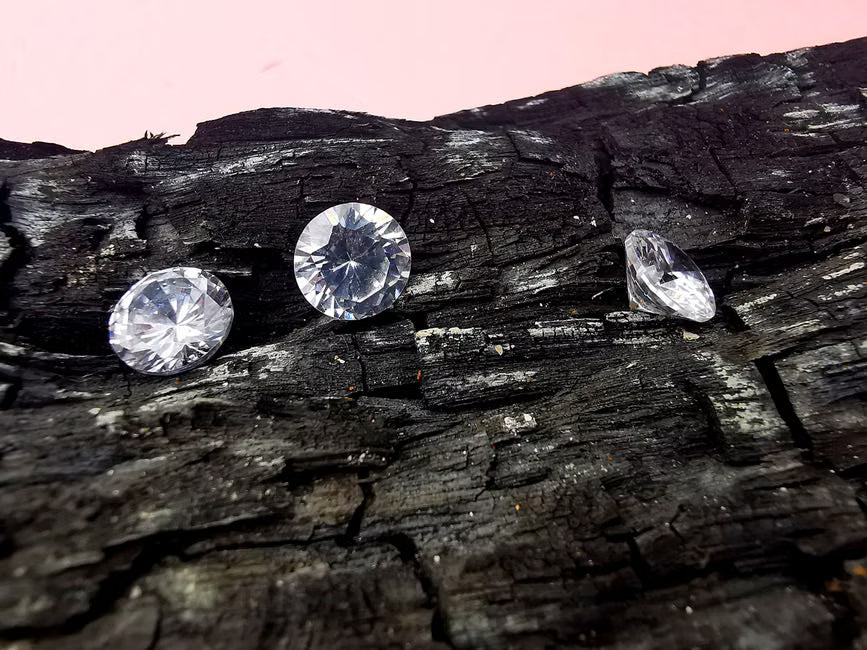
To the naked eye, a high-quality lab-grown diamond is completely indistinguishable from an earth-mined diamond. Even experienced gemologists cannot tell them apart without advanced diagnostic machinery. They share the exact same optical brilliance, fire, and scintillation.
When it comes to durability, lab-grown diamonds are unmatched. Both natural and lab-created diamonds rate a perfect 10 on the Mohs hardness scale, making them the hardest known substance on Earth. This means they are incredibly resistant to scratching and daily wear, making them ideal for everyday jewelry like engagement rings and artificial diamond studs.
| Property | Lab-Grown Diamond | Earth-Mined Diamond | Cubic Zirconia (CZ) | Moissanite |
|---|---|---|---|---|
| Chemical Composition | Pure Carbon (C) | Pure Carbon (C) | Zirconium Dioxide ($ZrO_2$) | Silicon Carbide (SiC) |
| Mohs Hardness | 10 | 10 | 8.0 – 8.5 | 9.5 |
| Refractive Index | 2.42 | 2.42 | 2.15 – 2.18 | 2.65 – 2.69 |
| Dispersion (Fire) | 0.044 | 0.044 | 0.058 – 0.066 | 0.104 |
| Durability | Extremely High | Extremely High | Medium (scratches over time) | Very High |
| Thermal Conductivity | Excellent | Excellent | Poor | Excellent |
Distinguishing Real Diamonds from Simulants Like Moissanite and Cubic Zirconia
It is incredibly important not to confuse artificial diamonds for sale with diamond simulants. Simulants like cubic zirconia (CZ) and moissanite only look like diamonds; they do not share the same chemical or physical DNA.
- Cubic Zirconia: CZ is made of zirconium dioxide. It is much softer than a real diamond (8 to 8.5 on the Mohs scale), meaning it will scratch, chip, and become cloudy over time as it absorbs skin oils and dirt.
- Moissanite: Made of silicon carbide, moissanite is a beautiful gemstone that rates a 9.5 on the Mohs hardness scale. However, it has a different refractive index than a diamond, exhibiting "double refraction." This gives moissanite a distinct "rainbow disco ball" sparkle that looks noticeably different from the clean, white light reflection of a real diamond. Additionally, because moissanite is an excellent heat conductor, it can sometimes trick basic thermal conductivity diamond testers into identifying it as a real diamond.
The Economics of Buying Artificial Diamonds for Sale
The most compelling reason to look for artificial diamonds for sale is the extraordinary cost savings. Because the supply chain for lab-created stones is incredibly streamlined, consumers can bypass the heavy resources, massive manpower, and ecological disruption associated with traditional open-pit mining.

When you buy a mined diamond, you are paying for an extensive network of middlemen — from exporters and rough-diamond brokers to cutting facilities, distributors, and high-end retail markups. A factory-direct model for lab diamonds eliminates these markups, passing savings directly to you.
For example, while a 1-carat mined diamond can easily cost several thousand dollars depending on its quality, a 1-carat loose lab-grown diamond from leading manufacturers can start as low as $499. If you scale up, the savings become even more dramatic. A stunning 1.90-carat Ideal Cut Round Lab-Grown Diamond (J Color, VVS1 Clarity, IGI Certified) can be found on the market for around $740.00.
Why Are Artificial Diamonds for Sale Priced 50% to 80% Lower?
The price of a diamond is heavily influenced by "carat weight thresholds." In the mined diamond industry, crossing major milestones (like moving from a 0.90-carat stone to a full 1.00-carat stone) causes a massive, exponential jump in price, even though the physical size difference is virtually unnoticeable to the naked eye.
With lab-grown diamonds, these price jumps are far gentler because growers can reliably produce larger crystals. Furthermore, the global market has seen massive inventory growth. Major online listing databases currently hold hundreds of thousands of loose lab-grown stones, with some platforms listing over 20,000 to 80,000 options at any given time. This abundance of supply keeps pricing incredibly competitive.
It is also worth noting that international trade dynamics play a role in pricing. In 2026, U.S. tariffs on imported lab-grown diamonds from major manufacturing hubs like India (up to 26%) and China (30%) have made domestic finishing and direct-to-consumer sourcing models incredibly important for stabilizing retail prices.
Navigating the 4 Cs, Certification, and Custom Jewelry Design
Just like natural diamonds, artificial diamonds for sale are evaluated using the traditional 4 Cs:
- Carat Weight: The physical weight of the stone (1 carat = 0.2 grams).
- Cut: The most important factor for sparkle. An "Ideal" or "Excellent" cut ensures that light entering the diamond reflects back through the top, rather than leaking out of the sides or bottom. For maximum sparkle in a round brilliant cut, look for a depth percentage between 54% and 66%, and choose a stone with "none" for the culet (the bottom point) to prevent light leakage.
- Color: Graded from D (completely colorless) to Z (light yellow or brown). Choosing a stone in the near-colorless range (G, H, or I) or even an F-color is a highly strategic way to save money, as these stones look completely colorless to the naked eye when set in metal. You can also explore beautiful, unique colored options like champagne rose-cut diamonds.
- Clarity: Graded from Flawless (FL) to Included ($I_3$). Very, Very Slightly Included (VVS1 or VVS2) and Very Slightly Included (VS1 or VS2) diamonds contain microscopic inclusions that are invisible to the naked eye, offering incredible value.
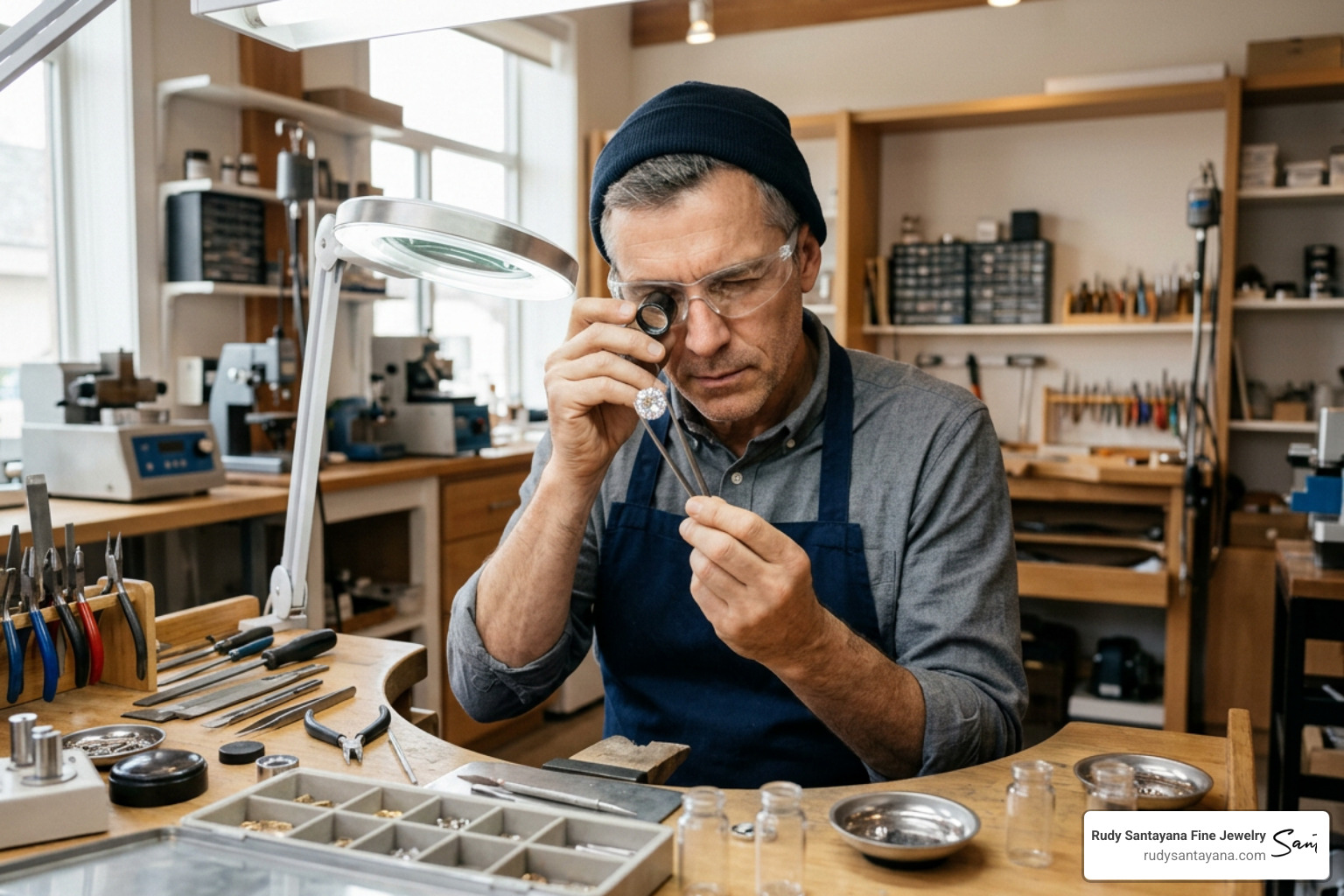
To ensure you are getting exactly what you pay for, always buy diamonds that are certified by reputable, independent gemological laboratories such as the Gemological Institute of America (GIA) or the International Gemological Institute (IGI). These organizations use 3 to 6 separate gemologists to individually grade each stone. For added security, certified lab diamonds above 0.5 carats are laser-inscribed on the girdle with their unique certificate number, which you can easily verify under 10x magnification.
Designing Custom Jewelry with Certified Lab Diamonds
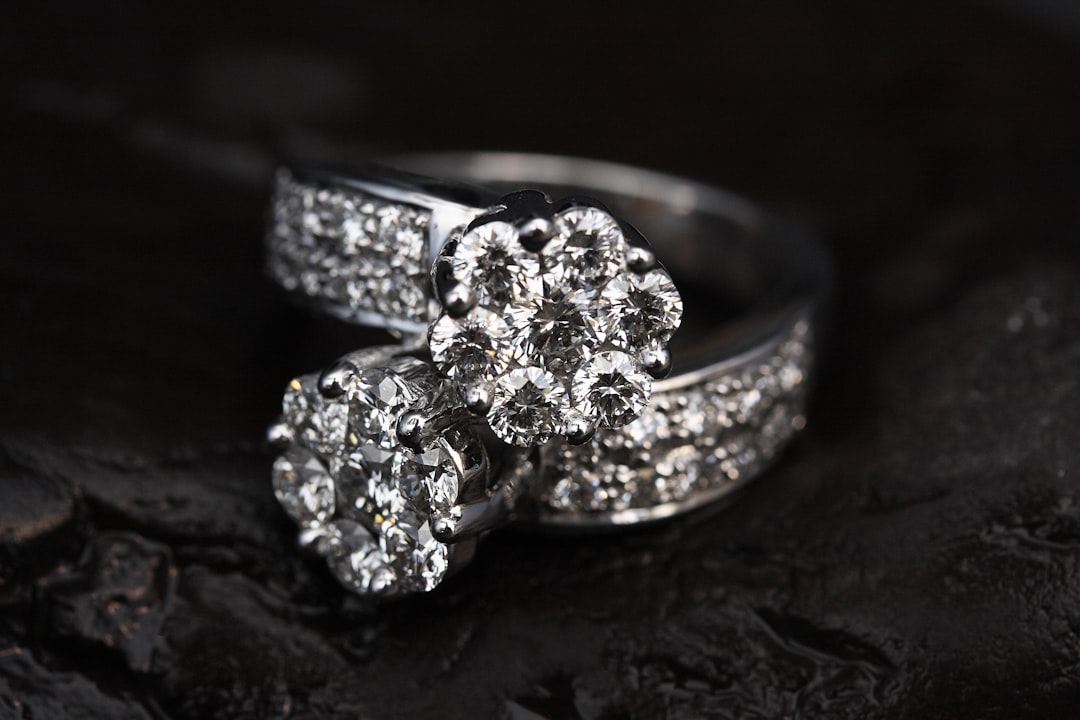
Because lab-grown diamonds are physically identical to mined stones, they can be set, resized, and polished by any skilled jeweler. At Rudy Santayana Fine Jewelry in Coral Gables, we specialize in taking these stunning loose stones and setting them into breathtaking, handcrafted custom designs.
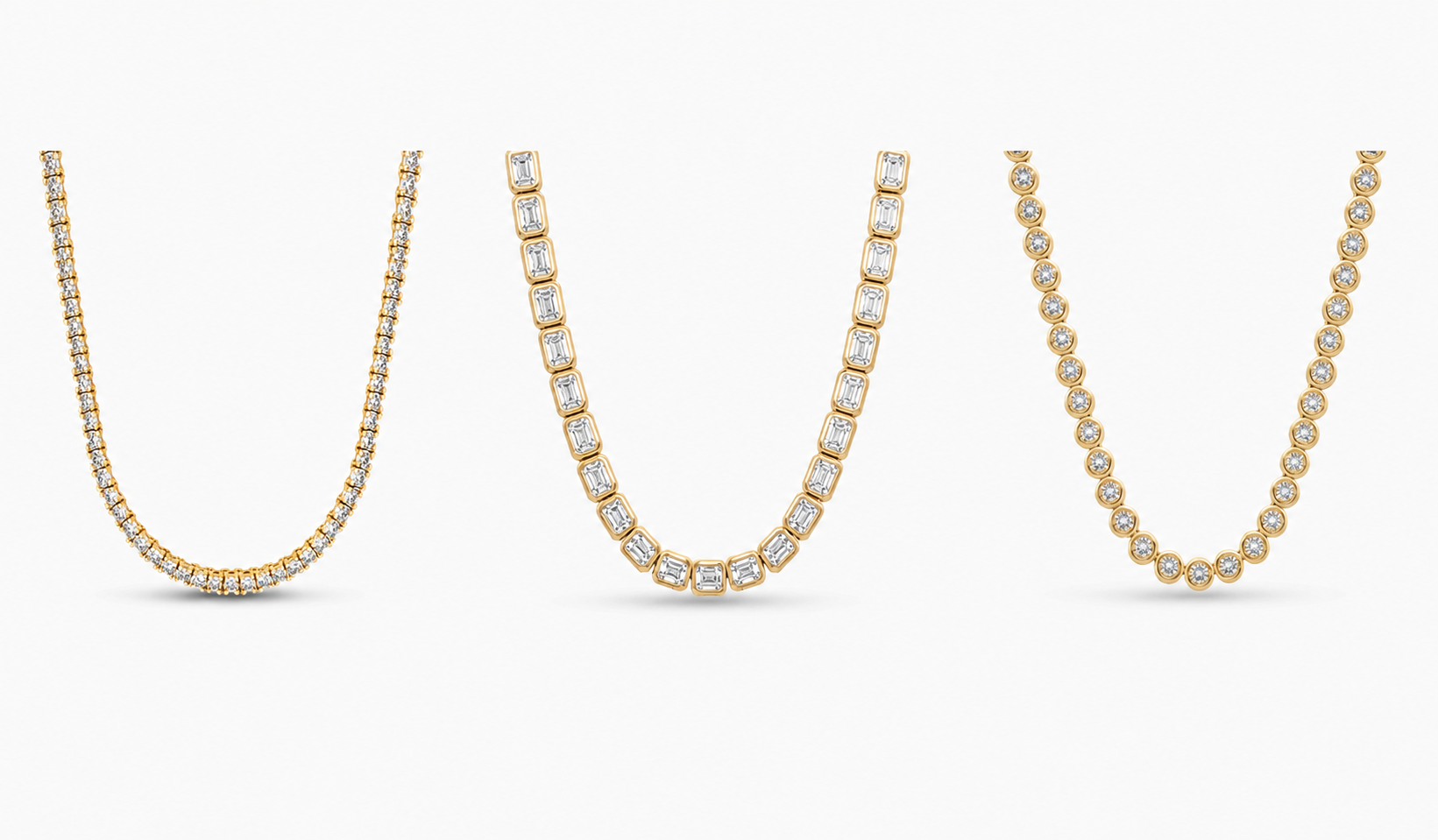
Whether you want to create classic artificial diamond studs, a heavy custom diamond chain pendant, or a timeless ultimate 5mm diamond tennis chain guide featuring a high-quality 5mm tennis chain, lab diamonds offer endless possibilities.
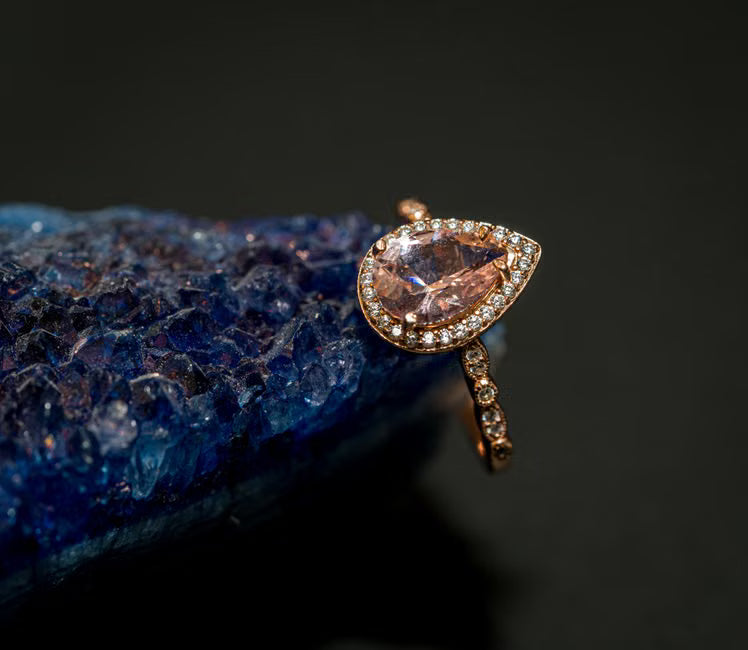
If you are planning an engagement ring, you can explore beautiful settings like a 3 stone pear diamond ring or design a more elaborate 5 stone pear diamond ring guide 2026. In our local Coral Gables and Miami workshop, we often pair these modern stones with 96% recycled gold to create stunning, eco-friendly luxury pieces.
You can also find beautiful inspiration in mixed-stone designs, such as pairing a gorgeous lab-grown emerald with natural diamonds, or exploring local design trends right here in South Florida to see how versatile these modern stones can be.
Frequently Asked Questions About Lab-Grown Diamonds
Do lab-grown diamonds hold resale value and can they be insured?
Yes, lab-grown diamonds can be fully insured! You can protect your jewelry against loss, theft, or damage by getting an independent appraisal and adding it to a specialized jewelry insurance policy or a home insurance rider.
When it comes to resale value, it is important to be realistic. Mined diamonds have a highly established, albeit marked-down, secondary market. Lab-grown diamonds do not hold significant long-term investment or resale value because manufacturing technology continues to improve, making them easier to produce over time. However, most people buy diamond jewelry for sentimental value and daily wear rather than as a financial investment. The massive upfront savings of buying a lab diamond often far outweigh any potential future resale considerations.
What are the ethical and environmental benefits of lab-grown diamonds?
Choosing a lab-grown diamond offers incredible peace of mind. Traditional diamond mining involves massive ecological disruption, open-pit excavations, and high carbon emissions. By contrast, growing diamonds in a laboratory has a significantly smaller ecological footprint.
Furthermore, lab-grown diamonds are 100% conflict-free. While the Kimberley Process has made great strides in regulating the mined diamond trade, choosing a laboratory-grown stone completely eliminates any concerns regarding human rights abuses or exploitative labor practices in remote mining regions.
What should I look for in shipping, warranties, and return policies when buying online?
If you are shopping for artificial diamonds for sale online, always protect your purchase by verifying the seller's policies:
- Return Policy: Look for a solid 30-day return policy that allows you to inspect the stone in person. Be aware that some online retailers charge restocking or return fees (e.g., $100) unless you opt for store credit.
- Secure Shipping: High-value jewelry shipments should always be fully insured and require an adult signature upon delivery.
- Warranties: Ensure your purchase is backed by a lifetime manufacturing warranty. If you are buying a finished piece of jewelry, keep in mind that many lifetime guarantees require you to have the item inspected by a jeweler every 6 months to remain active.
Conclusion
At Rudy Santayana Fine Jewelry, we believe that modern luxury should be smart, beautiful, and tailored to your unique story. By choosing artificial diamonds for sale, you can maximize your budget to get a larger, higher-quality center stone without compromising on brilliance, durability, or craftsmanship.
Whether you want to design a custom engagement ring, craft a stunning new pendant using our custom-made diamond pendants guide 2026, or explore our full range of lab diamond jewelry, we are here to bring your vision to life in our Coral Gables design studio.
Ready to take the next step and design something truly extraordinary? Book an appointment with Rudy Santayana Fine Jewelry today, and let's start crafting your perfect piece!