Everything You Need to Know About 1 Carat Pear Diamond Pricing
What Does a 1 Carat Pear Diamond Cost in 2026?
A 1 carat pear diamond price can range from about $2,800 to $4,000 for many natural, certified diamonds in mainstream quality grades. Lower-quality or heavily discounted listings may fall below that range, while exceptional color, clarity, cut, and brand premiums can push the price far higher.
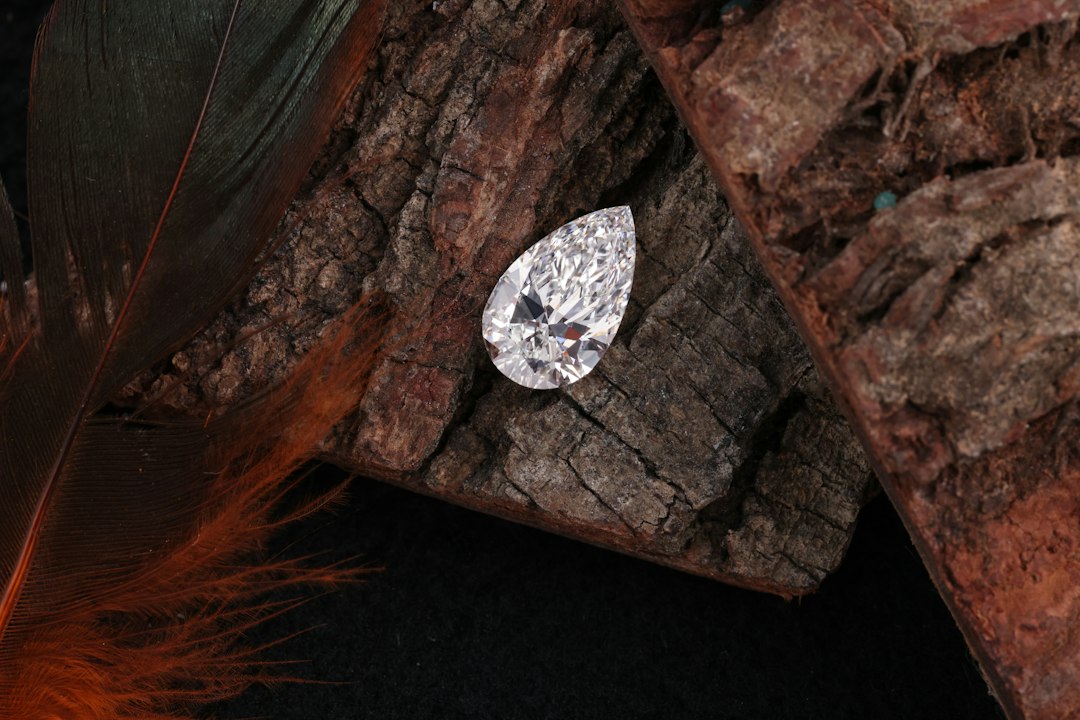
For the best balance of beauty and budget, look for a well-proportioned pear diamond with G-I color and VS2-SI1 clarity. Cut quality matters most: a bright stone with balanced symmetry and a minimal bow-tie can look more impressive than a higher-grade diamond with weak light performance. A one-carat pear typically measures around 9.05 by 5.45 mm and often appears larger face-up than a round diamond of the same weight.
I am Rudy Santayana, a fine jewelry designer in Miami specializing in custom bridal jewelry, redesigns, and personal service. I help clients compare every 1 carat pear diamond price factor so they can choose a distinctive stone that looks beautiful in the setting they love.
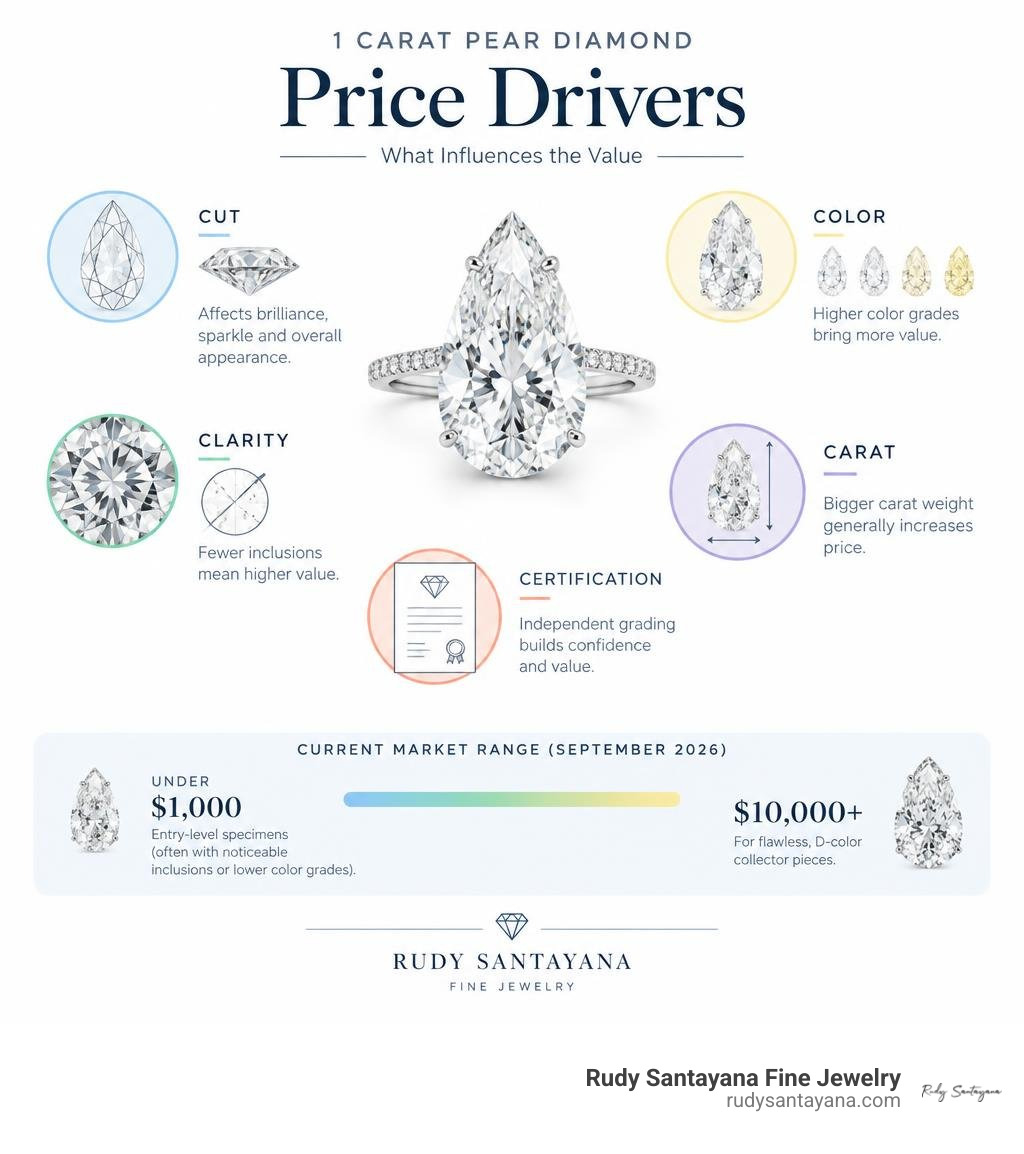
Current Market Benchmarks for 1 Carat Pear Diamond Price
When evaluating the market in September 2026, understanding broad wholesale benchmarks and retail spreads gives you significant leverage. The broader market for 1 carat pear cut natural stones spans anywhere from entry-level specimens under $1,000 (often with noticeable inclusions or lower color grades) up to $10,000+ for flawless, D-color collector pieces.
However, the vast majority of engagement-quality diamonds sit within a defined middle tier. Industry trackers place the fair market median around $3,200 to $3,400. Market transparency across wholesale databases reveals that prices for identical grading tiers can vary widely between online discounters, standard retail stores, and custom jewelry houses.
| Quality Tier | Color Grade | Clarity Grade | Typical Market Range (USD) |
|---|---|---|---|
| Value / Entry | J – K | SI1 – SI2 | $1,800 – $2,500 |
| Mainstream Sweet Spot | G – I | VS2 – SI1 | $2,800 – $4,000 |
| High Tier | E – F | VVS2 – VS1 | $4,100 – $6,200 |
| Flawless Collection | D | FL – IF | $7,000 – $10,500+ |
You can check real-time baseline fluctuations through current market pricing data to see how wholesale market conditions shift across different seasons.
The Sweet Spot for Best Value Pear Diamonds
You do not need to pay for a D Flawless diamond to have an extraordinary ring. The "sweet spot" for pear-shaped diamonds lies at the intersection of visual beauty and practical budgeting.
We consistently guide our clients toward G, H, or I color paired with VS2 or eye-clean SI1 clarity. Pear shapes have a modified brilliant facet arrangement that excels at breaking up light, making microscopic inclusions virtually impossible to spot with the naked eye. Selecting an eye-clean SI1 or VS2 allows you to allocate more of your budget toward custom design work, side stones, or metal upgrades without sacrificing brilliance.
Comparing 1.00 Carat vs. 1.20 Carat Stones
Diamond prices do not scale in a straight, linear line; they jump exponentially at critical weight thresholds like 1.00 ct, 1.25 ct, and 1.50 ct.
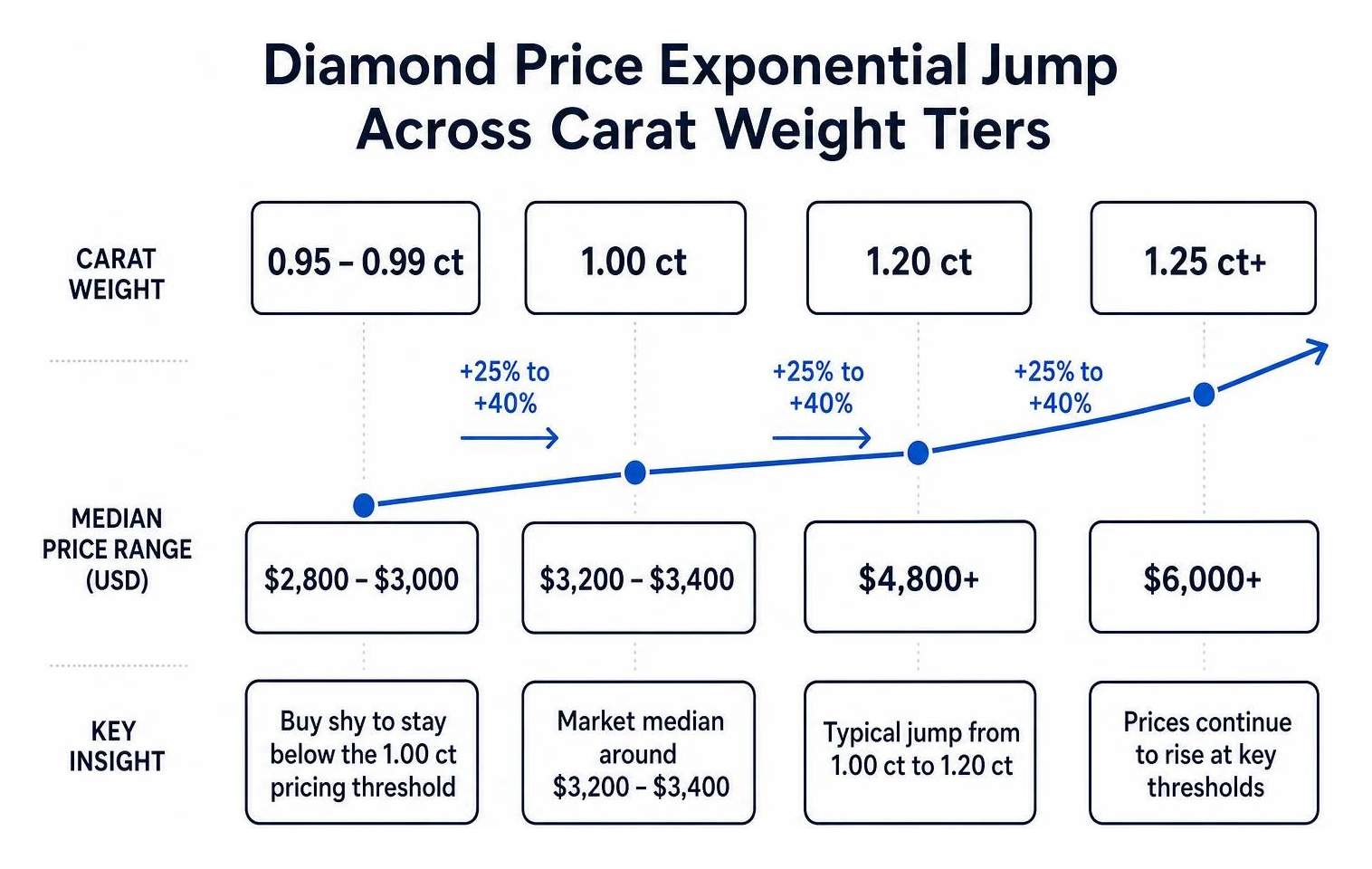
A jump from 1.00 carat to 1.20 carats often represents a 25% to 40% increase in total cost, moving the median price range from roughly $3,200 to over $4,800+. To maximize your investment, consider "buying shy"—purchasing a stone weighing between 0.95 and 0.99 carats. These diamonds offer nearly identical millimeter dimensions to a full 1.00 carat stone but sit just below the pricing threshold, saving you 10% to 15%. Examining historical diamond pricing data shows that these threshold steps remain a persistent pricing dynamic across the industry.
How Diamond Quality Characteristics Drive the Cost
Unlike round diamonds, which have standardized cut grades (such as Excellent or Ideal) issued by major grading laboratories, fancy shapes like pear diamonds do not receive an overall cut grade on standard grading reports. As a result, the beauty and value of a pear diamond depend heavily on physical proportions, symmetry, polish, and light return.

A well-proportioned 1 carat pear diamond typically exhibits:
- Length-to-Width (L/W) Ratio: 1.45 to 1.75 (1.55–1.65 is traditional).
- Depth Percentage: 59% to 65%.
- Table Percentage: 53% to 63%.
- Face-Up Surface Area: Around 36 mm², creating a significantly larger visual appearance than a 1 carat round diamond (which averages ~33 mm²).
Every pear diamond displays some degree of a "bow-tie" effect—a dark shadow across the center caused by light leaking out the bottom. In well-cut stones, this shadow is subtle and blends into the diamond's natural scintillation. In poorly cut stones, a heavy, dark bow-tie dulls the center and reduces the stone's value.
How the 4Cs Influence 1 Carat Pear Diamond Price
Each of the classic 4Cs plays a distinct role in calculating diamond pricing:
- Cut: Influences sparkle and eliminates dead zones. Premium polish and symmetry command a 15% to 25% price premium over mediocre cuts.
- Color: Pear shapes concentrate body color in their pointed tip. While round stones hide warmth easily at lower grades, pear cuts require careful selection (typically H or higher) if set in platinum or white gold.
- Clarity: Prongs or bezel settings can conceal inclusions placed near the edges, allowing well-placed SI1 stones to offer premium appeal at lower costs.
- Carat Weight: The raw mass of the diamond sets the baseline pricing tier.
For an extensive breakdown of diamond selection fundamentals, read our comprehensive engagement rings ultimate guide.
Cut Proportions, Polish, and Fluorescence Factors
Beyond the basics, secondary characteristics heavily influence market value:
- Polish and Symmetry: Aim for "Excellent" or "Very Good." Proper symmetry ensures the curved lobes match perfectly and the point aligns directly with the apex.
- Culet: The bottom tip should ideally be "None" or "Very Small." A visible culet appears as a dark circle or hole in the center.
- Fluorescence: Faint to medium blue fluorescence can actually improve the visual appearance of near-colorless stones (such as I or J color) by neutralizing yellowish undertones in natural sunlight, often trading at a 2% to 10% discount compared to non-fluorescent stones.
Comparing Diamond Types and Setting Options
The stone itself is only one part of the equation. Balancing the diamond choice with an intentional setting creates a cohesive, durable piece of jewelry.
When designing a bespoke ring at our Coral Gables studio, we carefully evaluate how diamond origin (natural vs. lab-grown) and setting mechanics come together to protect the stone and enhance its natural geometry. If you are exploring mounting styles, review our guide on choosing the right diamond ring setting.
Natural vs. Lab-Grown: Evaluating 1 Carat Pear Diamond Price Differences
One of the most transformative shifts in modern fine jewelry is the accessibility of lab-created diamonds. Chemically, physically, and optically identical to mined stones, lab-grown pear diamonds are created using High Pressure High Temperature (HPHT) or Chemical Vapor Deposition (CVD) processes.
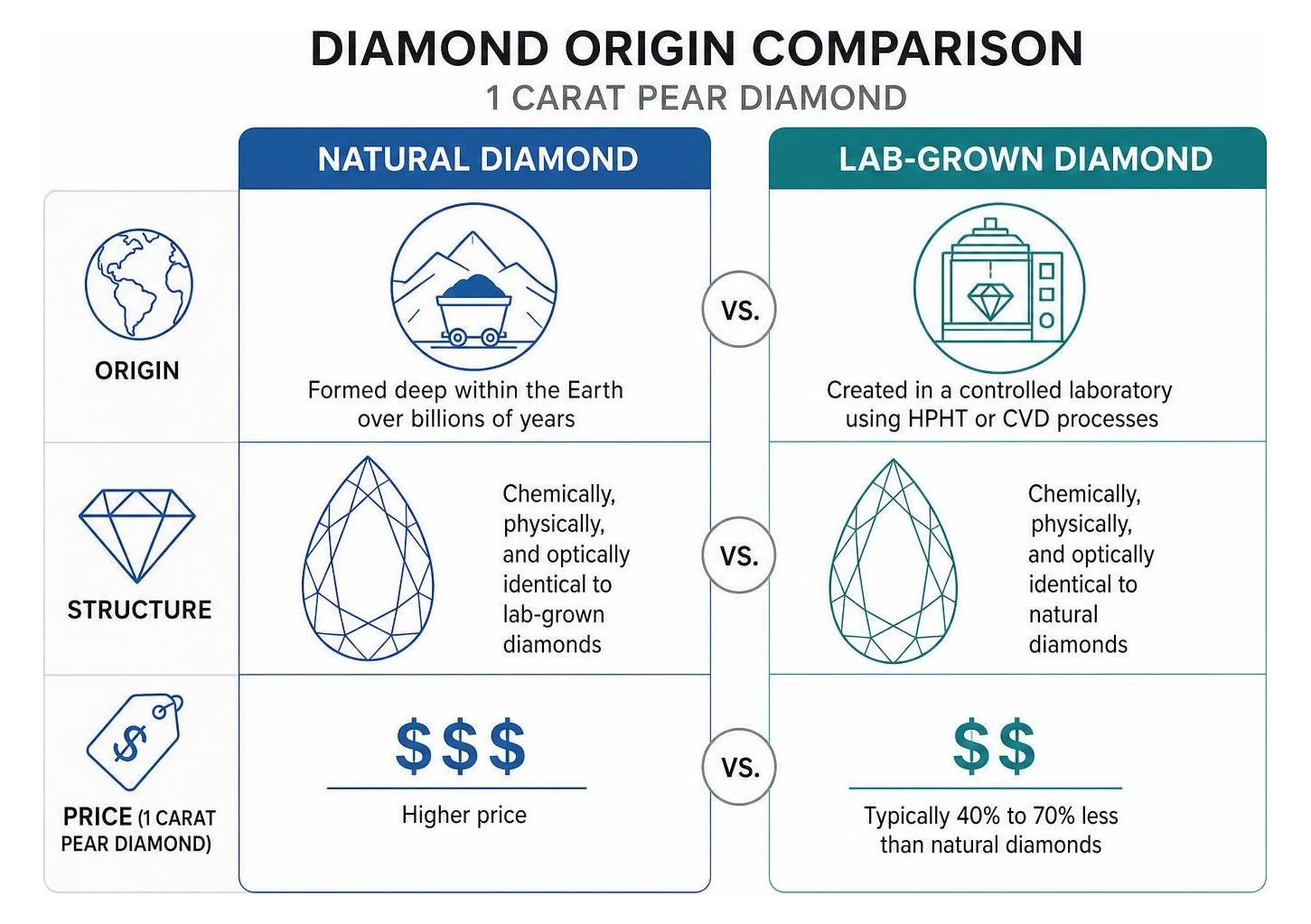
A 1 carat lab-grown pear diamond of exceptional quality (E-F color, VVS2-VS1 clarity) typically costs 40% to 70% less than its natural counterpart. This price difference allows buyers to allocate resources toward larger carat weights or intricate custom mountings. To understand the structural and value dynamics between both options, explore our analysis of lab diamond rings vs real diamonds and our detailed buying artificial diamonds guide.
Popular Settings: Solitaire, Three-Stone, and Bezel
The setting you choose impacts both the overall cost and the daily durability of your ring. The sharp tip of a pear diamond is structurally vulnerable to chipping if struck against hard surfaces, making protective setting architecture essential.
- Solitaire Settings: Highlighting the stone's silhouette, a classic prong solitaire requires a protective V-prong at the point. Discover distinct variations in our pear shaped ring styles gallery.
- Bezel Settings: A modern, sleek choice that wraps the diamond's perimeter in solid gold or platinum, offering maximum edge protection. Explore our bespoke bezel pear engagement ring designs.
- Multi-Stone Settings: Pairing a center pear stone with tapered baguettes, rounds, or pear side stones adds dimension and finger coverage. Browse our custom 3 stone pear diamond ring collections to see how side stones complement teardrop geometry.
Smart Buying Strategies for Maximizing Value
To ensure you get the highest visual return for your investment, use these practical buying strategies:
- Insist on Respected Certification: Always ensure natural stones carry a report from the Gemological Institute of America (GIA) or the American Gem Society (AGS). Uncertified stones or reports from lenient labs often overstate color and clarity grades by 1 to 2 tiers.
- Prioritize Face-Up Dimensions: Two diamonds with the exact same 1.00 carat weight can look noticeably different in size. A shallow stone might measure 9.4 mm long while a deep stone measures only 8.6 mm. Look for balanced dimensions (around 9.0 × 5.5 mm) with optimal depth (59%–65%).
- Verify Eye-Cleanliness: Look at 360-degree high-definition video or view the stone in person. An SI1 clarity diamond with dispersed, white inclusions along the perimeter is eye-clean and costs significantly less than a VS1 stone.
- Work Directly with a Custom Artisan: Custom design ensures the mounting is built around your diamond's exact millimeter measurements rather than forcing a unique fancy shape into a mass-manufactured, generic head. We invite you to design your own diamond engagement rings with us for a tailored piece.
Frequently Asked Questions About 1 Carat Pear Diamonds
What is the average price of a 1 carat pear diamond?
For a natural, certified 1 carat pear diamond in mainstream quality grades (G–I color, VS2–SI1 clarity), the average price falls between $2,800 and $4,000. Premium specifications (D–F color, VVS+ clarity) range from $4,500 to $8,000+, while lab-grown alternatives of equivalent or higher grade typically range between $600 and $1,200.
Are pear-shaped diamonds cheaper than round brilliant cuts?
Yes. Pear-shaped diamonds are generally 10% to 25% less expensive per carat than round brilliant diamonds of matching quality. Cutting a rough diamond into a pear shape results in significantly less wasted material during the manufacturing process compared to cutting a round stone, and that efficiency is passed on to the buyer.
What color and clarity grades offer the best value for a 1 carat pear?
The ideal value combination is H color and VS2 clarity. If you plan to set the stone in yellow gold or rose gold, you can comfortably drop to an I or J color without seeing unwanted warmth, as the metal setting masks faint yellow undertones.
Conclusion
Finding the ideal 1 carat pear diamond comes down to balancing cut precision, balanced proportions, and smart color and clarity choices. By focusing on eye-clean clarity (VS2–SI1), near-colorless grades (G–I), and symmetry that minimizes excessive bow-tie shadows, you can secure an extraordinary center stone without paying premium markups for invisible grades.
At Rudy Santayana Fine Jewelry in Coral Gables, Florida, we combine innovative custom design, meticulous craftsmanship, and personalized customer care to craft rings that stand the test of time. Whether you are seeking a rare natural pear diamond or exploring bespoke lab-grown creations, our team is here to guide you through every detail.
Ready to explore styling options and proportions for your ring? Read our styling guide to explore how to wear and style a pear-shaped diamond ring and begin planning your custom piece today.