The Savvy Shopper's Guide to 2 Carat Man Made Diamond Rings
Why a 2 Carat Man Made Diamond Ring Is a Smart Luxury Choice
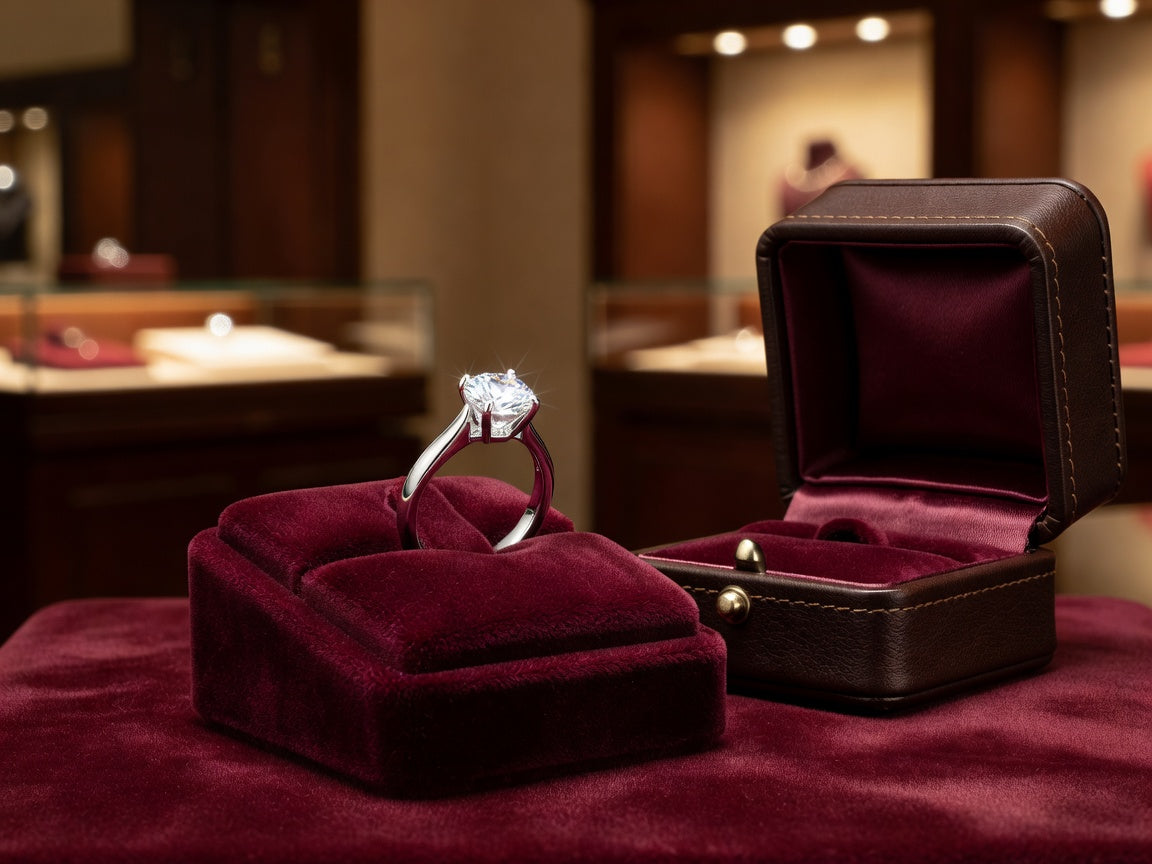
A 2 carat man made diamond ring gives you the impressive size, sparkle, and everyday durability of a diamond without the much higher price of a comparable mined stone. Lab-grown diamonds have the same chemical makeup and a 10 rating on the Mohs hardness scale, so they are a strong choice for an engagement ring or a signature piece worn every day.
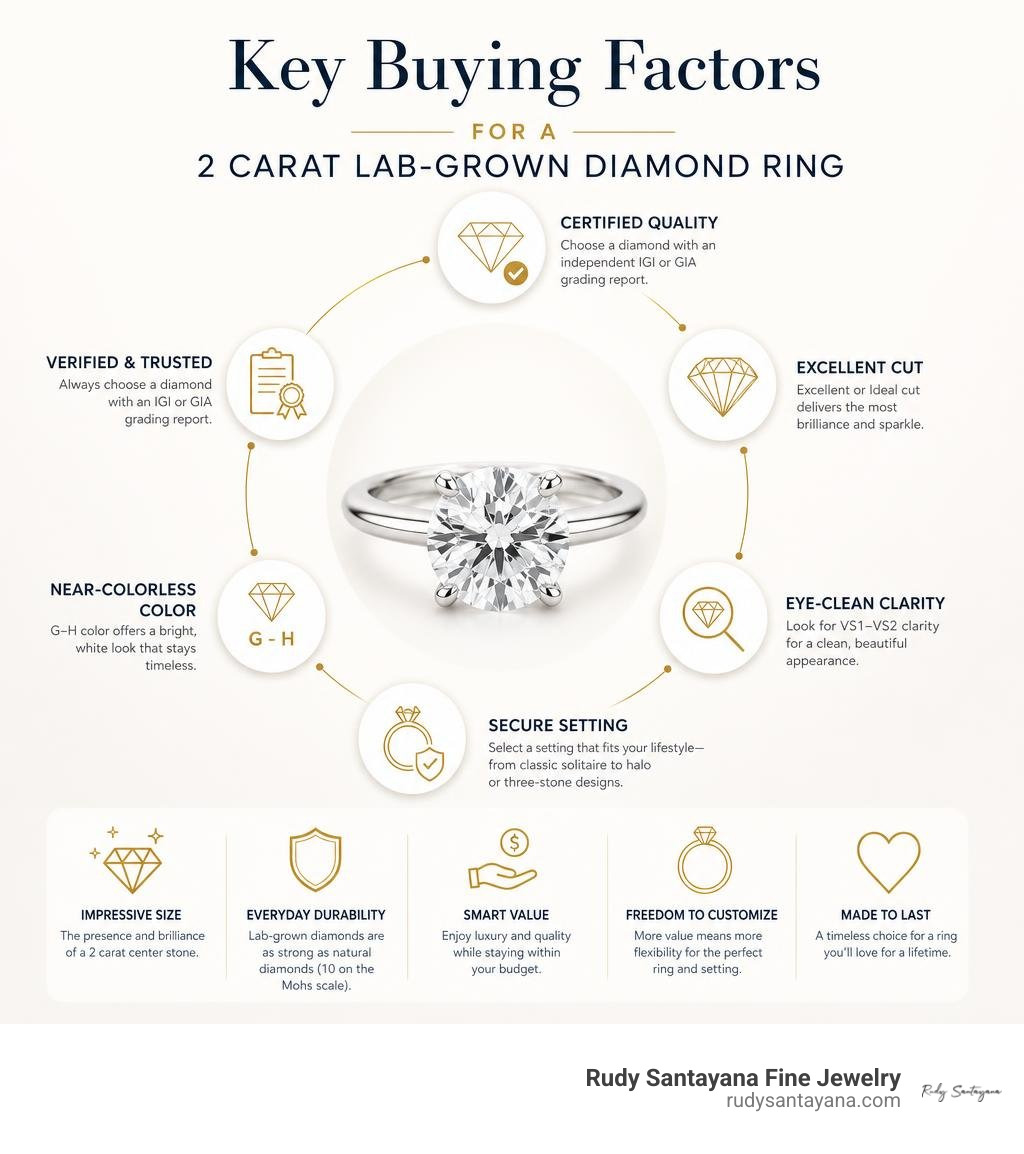
For the best balance of beauty and budget, look for:
- An independent IGI or GIA grading report
- An excellent or ideal cut, which has the greatest effect on sparkle
- Eye-clean clarity, often in the VS1-VS2 range
- Near-colorless color, such as G-H, for a bright white appearance
- A secure setting that suits your lifestyle, from a classic solitaire to a halo or three-stone design
A 2 carat lab-grown diamond ring commonly falls around $2,000 to $8,000, while a similar natural-diamond ring may cost roughly $10,000 to $40,000. The lower upfront cost can leave more room for a custom setting, higher-quality metal, or the cut and proportions that make the diamond truly stand out.
I am Rudy Santayana, a fine jewelry designer in Miami specializing in custom jewelry, bridal pieces, and redesigns. I help clients create a 2 carat man made diamond ring that feels personal, polished, and made to earn compliments for years to come.
The shifting perspective on fine jewelry is undeniable. More than 70% of consumers under 40 now actively seek out lab-grown gemstones for their engagement pieces. The broader industry reflects this massive cultural pivot: the global lab-grown diamond market is projected to reach $49.9 billion by 2030, charting an impressive compound annual growth rate of 9.4%.
For generations, settling on a two-carat center stone meant making serious compromises on color, clarity, or your savings account. Today, choosing a laboratory-created gem allows you to prioritize exceptional visual beauty, premium precious metals, and intricate handcrafted design without taking on unnecessary financial strain.
Understanding the Value of a 2 Carat Man Made Diamond Ring
When exploring fine jewelry options, the term "value" encompasses far more than the figure on a price tag. It represents the intersection of visual brilliance, long-term wearability, and maximizing your purchasing power.
Opting for a lab-created gemstone allows you to allocate your budget strategically. Instead of paying a premium for underground mining operations and lengthy supply chains, you invest directly in physical craftsmanship, superior cut grades, and bespoke design elements.
| Feature | 2 Carat Lab-Grown Diamond | 2 Carat Natural Mined Diamond |
|---|---|---|
| Typical Price Range | $2,000 – $8,000 | $10,000 – $40,000+ |
| Chemical Composition | 100% Pure Crystallized Carbon | 100% Pure Crystallized Carbon |
| Mohs Hardness | 10 (Maximum Durability) | 10 (Maximum Durability) |
| Refractive Index | 2.42 (Identical Brilliance) | 2.42 (Identical Brilliance) |
| Grading Standards | 4Cs (Cut, Color, Clarity, Carat) | 4Cs (Cut, Color, Clarity, Carat) |
| Independent Certification | IGI, GIA | GIA, IGI |
| Origin Traceability | Modern Controlled Laboratory | Traditional Earth Excavation |
Cost Comparison: Lab-Grown vs. Natural Mined Stones
The most immediate difference buyers notice is the price disparity. Lab-created gems routinely offer savings between 70% and 85% compared to mined diamonds of identical optical, physical, and chemical quality.
A natural 2 carat diamond with an Excellent cut, F color, and VS1 clarity can easily command between $18,000 and $30,000 or more. A lab-grown diamond with matching specifications typically ranges between $2,000 and $4,500 for the loose stone.
These cost efficiencies give you the creative freedom to explore custom mountings, platinum upgrades, or diamond-accented bands. For a broader overview of how to plan your investment wisely, our lab diamond ring buying guide walks through every detail of budgeting for fine jewelry.
Physical Durability and Chemical Composition
A persistent myth surrounding lab diamonds is that they are somehow softer, less brilliant, or fundamentally different from earth-mined stones. In reality, lab diamonds are not imitations like cubic zirconia or moissanite; they are authentic diamonds formed through advanced technology replicating natural subterranean forces.
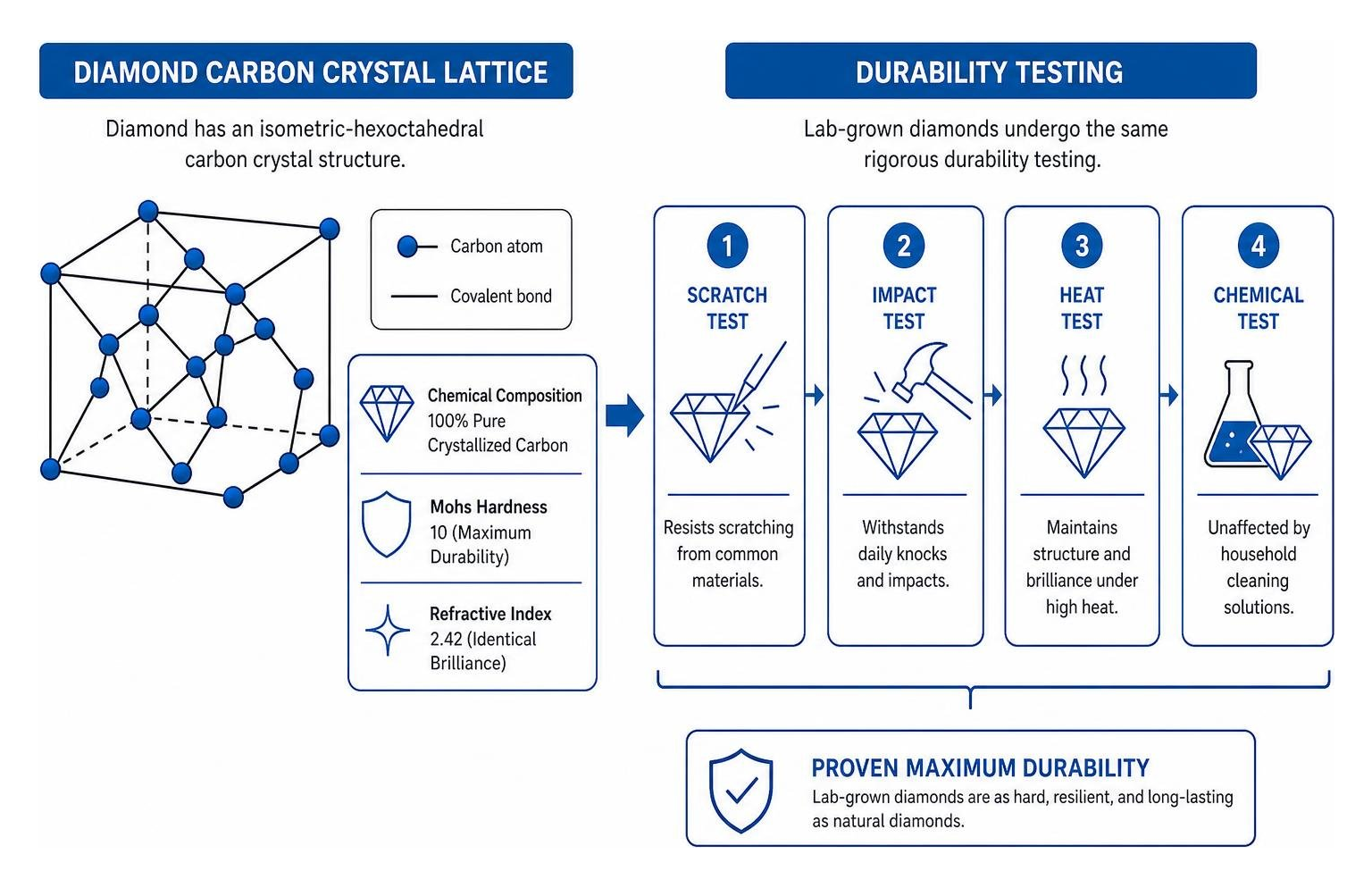
From a scientific standpoint, lab stones share the identical isometric-hexoctahedral carbon crystal structure of natural diamonds. They score a perfect 10 on the Mohs hardness scale, making them the hardest known mineral on Earth.
Whether exposed to heat, daily friction, or household cleaning solutions, their physical resilience ensures they will not scratch, chip easily, or lose their brilliance over decades of daily wear. For a closer look at the mineralogy and thermal properties of carbon crystals, academic literature detailing gemstone properties and diamond structure provides extensive background on crystal growth patterns.
Grading Quality: The 4Cs in 2-Carat Lab Stones
Evaluating a 2 carat lab stone requires the exact same criteria used for mined stones: the internationally recognized 4Cs established by the Gemological Institute of America (GIA)—Cut, Color, Clarity, and Carat weight.
Because a 2 carat stone has a substantial surface area (approximately 8.1 mm in diameter for a round brilliant), internal inclusions and tinting can be more visible than in smaller gems. Understanding how to balance these four characteristics ensures you select a vibrant, eye-clean center stone.
Evaluating the 4Cs for a 2 Carat Man Made Diamond Ring
- Cut: The cut is the single most critical factor determining a diamond's brilliance, fire, and scintillation. Even a stone with flawless clarity and pure white color will appear lifeless if it is cut too shallow or too deep. Always prioritize an Ideal or Excellent cut grade to ensure maximum light return.
- Color: Diamond color grades run from D (completely colorless) to Z (light yellow or brown). For a 2 carat ring set in white gold or platinum, stones graded D, E, or F provide an icy white appearance, while G and H grades deliver a bright, near-colorless look at an exceptional value. If you prefer yellow gold or rose gold mountings, an I or J color grade often looks entirely white against the warm metal backdrop.
- Clarity: Clarity assesses the presence of microscopic internal inclusions and surface blemishes. In a 2 carat stone, we recommend focusing on VS1 or VS2 (Very Slightly Included) grades. These stones are virtually always "eye-clean," meaning imperfections cannot be seen without 10x magnification. Paying a steep premium for VVS1 or Flawless grades rarely yields any visible difference to the naked eye.
- Carat Weight: Carat refers strictly to weight (where 1 carat equals 0.2 grams), not surface dimensions. A well-proportioned 2 carat stone distributes weight evenly across its diameter rather than hiding excess depth beneath the girdle.
To delve deeper into selecting top-tier lab diamonds without overspending, consult our comprehensive buying artificial diamonds guide 2026.
Essential Diamond Certifications and Grading Reports
Never purchase an uncertified center stone. Reputable lab-grown diamonds are accompanied by grading certificates issued by independent gemological laboratories, primarily the International Gemological Institute (IGI) or the Gemological Institute of America (GIA).

These independent institutions evaluate the stone's exact proportions, color tint, inclusion mapping, and growth method (CVD or HPHT). Most certified lab stones also feature a microscopic laser inscription on their girdle, matching the certificate number to protect your purchase and provide absolute transparency.
Popular Settings and Diamond Shapes for 2 Carat Stones
Selecting the right silhouette and setting transforms a loose 2 carat stone into a striking personal heirloom. A 2 carat gem is bold enough to serve as the focal point of a minimalist ring while retaining the scale needed to anchor complex, multi-stone custom arrangements.
How to Style and Set a 2 Carat Man Made Diamond Ring
Different diamond cuts project distinct aesthetics and wear differently on the hand:
- Round Brilliant: The timeless classic, offering 58 facets designed specifically to maximize light dispersion and sparkle.
- Oval Cut: Elongates the wearer's finger while offering a larger visible surface area per carat than a round stone. A 2 carat oval lab grown diamond ring remains one of the most sought-after styles for modern brides.
- Princess Cut: Sharp, contemporary geometric lines with high brilliance. A lab grown princess cut diamond looks striking in both solitaire and channel-set bands.
- Emerald and Radiant Cuts: Emerald cuts highlight pure clarity with elegant step-cut facets, while radiant cuts combine the emerald outline with brilliant faceting for intense sparkle.
Popular mounting styles include:
- Classic Solitaire: Four or six prongs elevate the center stone, allowing ambient light to enter from all angles.
- Hidden Halo: A subtle ring of pavé diamonds sits beneath the center stone's girdle, offering a discreet touch of brilliance visible from profile angles.
- Bezel Setting: A continuous metal rim encases the diamond, delivering sleek modern lines while offering optimal protection for active lifestyles.
Custom Ring Settings and Bridal Pairings
A substantial center stone deserves a balanced band and wedding pairing. Creating a harmonious bridal stack requires thoughtful consideration of prong clearance, band width, and metal selections.
If you plan on pairing your ring with a flush wedding band, you will want a setting engineered to lift the center basket slightly above the finger. Exploring how to choose a diamond ring setting is an essential step in matching your daily lifestyle to the right mounting.
For those looking to create a unified look from day one, commissioning a custom bridal set guarantees that your engagement ring and wedding band sit seamlessly together without unwanted gaps or metal friction.
At our Coral Gables workshop, our team works closely with you to design your own diamond engagement rings, turning your individual inspiration, lifestyle needs, and personal preferences into a bespoke heirloom.
Ethical Benefits, Market Trends, and Resale Realities
Modern fine jewelry buyers increasingly value transparency, ecological accountability, and technological innovation. Lab-created diamonds represent an evolution in how fine jewelry is produced and enjoyed.
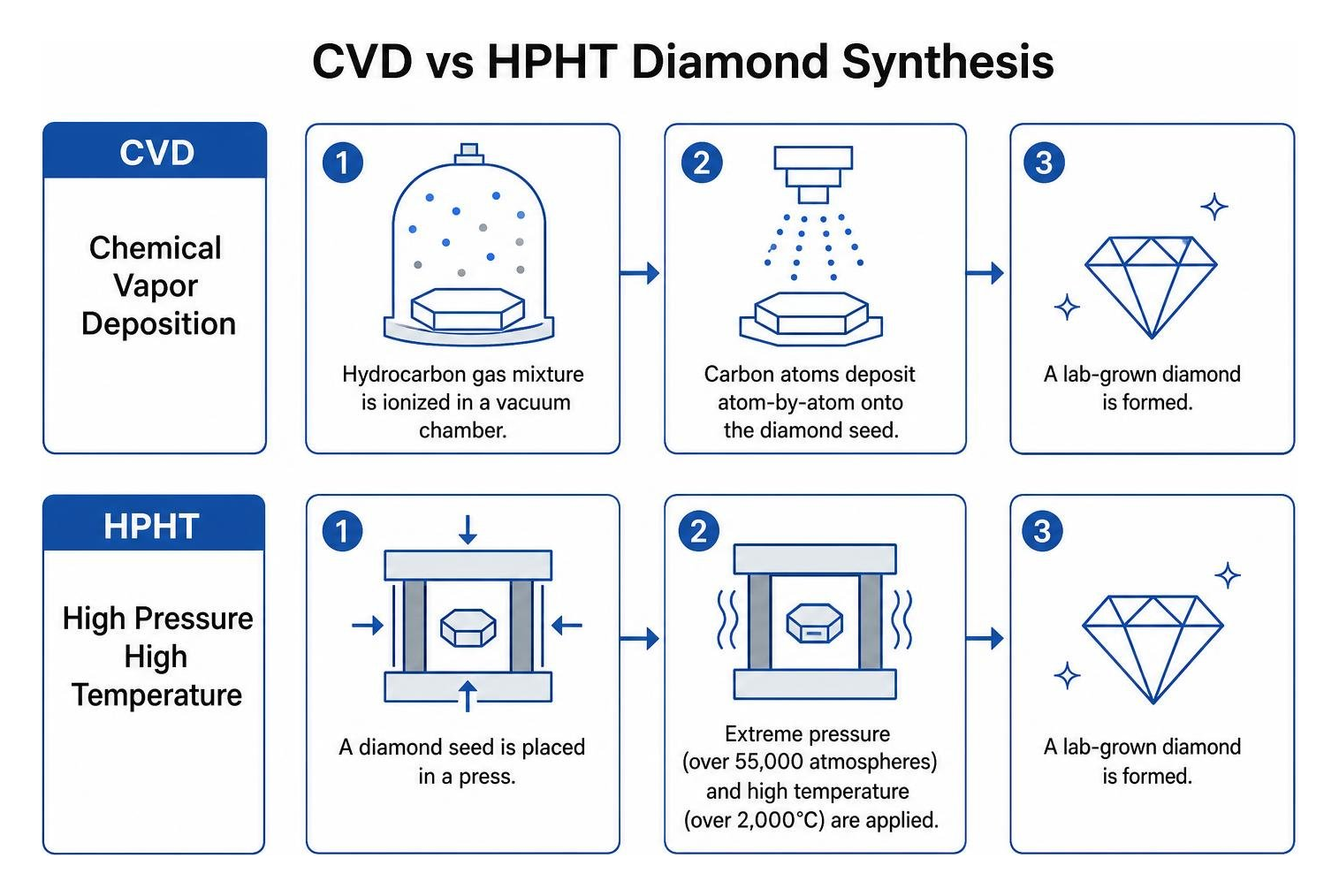
Lab diamonds are primarily produced through two advanced scientific methods:
- Chemical Vapor Deposition (CVD): A hydrocarbon gas mixture is ionized in a vacuum chamber, depositing pure carbon atom-by-atom onto a diamond seed crystal.
- High Pressure High Temperature (HPHT): Massive hydraulic presses recreate the intense subterranean heat (over 2,000°C) and pressure (over 55,000 atmospheres) required to grow crystallized carbon.
Both processes yield authentic diamonds that are visually, chemically, and physically indistinguishable from earth-mined gems, opening new possibilities for everyday lab diamond jewelry.
Sustainable Sourcing and Ecological Impact
Earth diamond mining requires extensive land excavation, heavy machinery fuel consumption, and significant water displacement. While international frameworks have improved labor standards in traditional mining regions, tracking the exact point of origin remains challenging.
For readers interested in global mineral economies and trade compliance, institutional publications detailing African resource trade and business overview outline the evolving regulatory landscapes governing resource extraction and commerce.
Lab-grown diamonds eliminate the environmental disruption of heavy earth excavation. Produced in modern, climate-controlled laboratory facilities—many powered by renewable energy—lab diamonds provide a fully traceable, conflict-free supply chain that appeals to eco-conscious couples.
Resale Value Expectations and Smart Buying Tips
When purchasing any fine jewelry, setting realistic expectations regarding resale value is critical. Mined diamonds and lab-grown diamonds should both be viewed primarily as emotional investments and personal keepsakes, rather than speculative financial assets.
Just as retail markups cause natural diamonds to lose 30% to 60% of their trade value on the secondary market, lab-grown diamonds also experience depreciation upon resale. The true financial benefit of a lab diamond is realized on the day of purchase, because you retain thousands of dollars upfront rather than locking capital away in a mined stone.
For an extensive review of purchasing strategies, our engagement rings ultimate guide 2026 offers in-depth advice for navigating modern jewelry purchases.
Smart Checklist for Buying a 2 Carat Lab Diamond:
- [ ] Confirm independent certification from IGI or GIA.
- [ ] Verify that the cut grade is rated Ideal or Excellent.
- [ ] Inspect the stone under magnification to confirm it is eye-clean (VS1–VS2 range).
- [ ] Check that color falls within your desired range (D–F for bright white, G–H for maximum value).
- [ ] Ensure the diamond girdle has a matching laser-inscribed serial number.
- [ ] Choose a secure setting made with solid precious metals (Platinum, 18k, or 14k Gold).
- [ ] Work with an experienced custom jeweler who offers cleaning, maintenance, and prong inspections.
Frequently Asked Questions About Man Made Diamond Rings
Can a jeweler tell if a diamond is man-made without specialized equipment?
No. Standard diamond thermal probes, optical loupes, and traditional gemological tests cannot distinguish a lab-grown diamond from an earth-mined diamond because their physical, thermal, and optical properties are identical.
Jewelers can only confirm a stone's origin by reading the laser inscription on the girdle under 30x–40x magnification or by testing the diamond in an advanced gemological spectrometer designed to evaluate trace elements and nitrogen growth patterns.
Do man-made diamonds lose their sparkle or turn cloudy over time?
No. Because lab diamonds are made of pure crystallized carbon with a Mohs hardness of 10, they never lose their optical brilliance, develop surface hazing, or turn cloudy over time.
If a lab diamond appears dull, it simply has a layer of surface residue from hand lotions, body oils, or dust. A quick cleaning with warm water, mild dish soap, and a soft-bristle toothbrush will instantly restore its full fire and brilliance.
What is the expected price for a certified 2 carat lab ring in 2026?
A certified 2 carat lab-grown diamond ring generally ranges from $2,000 to $8,000.
The final cost depends on the diamond's cut, clarity, and color grades, as well as the complexity and metal weight of the mounting. A classic solitaire in 14k gold sits near the lower end of that spectrum, whereas an intricate custom platinum ring featuring pavé side diamonds will fall toward the upper tier.
Conclusion
Choosing a 2 carat lab-grown diamond ring offers the ideal blend of luxury, durability, and practical value. By delivering identical optical sparkle and geological hardness at a fraction of the traditional cost, lab-created diamonds allow you to focus on what matters most: exceptional craftsmanship, personalized detailing, and finding a design you will cherish for a lifetime.
At Rudy Santayana Fine Jewelry, we pride ourselves on delivering bespoke craftsmanship and personalized service from our design studio in Coral Gables, FL. Whether you are reimagining an existing concept or creating a custom engagement piece from the ground up, we are dedicated to bringing your vision to life.
Ready to find your ideal diamond? We invite you to explore our premier lab-grown diamond collection or visit us in Coral Gables to begin designing your custom ring today.